
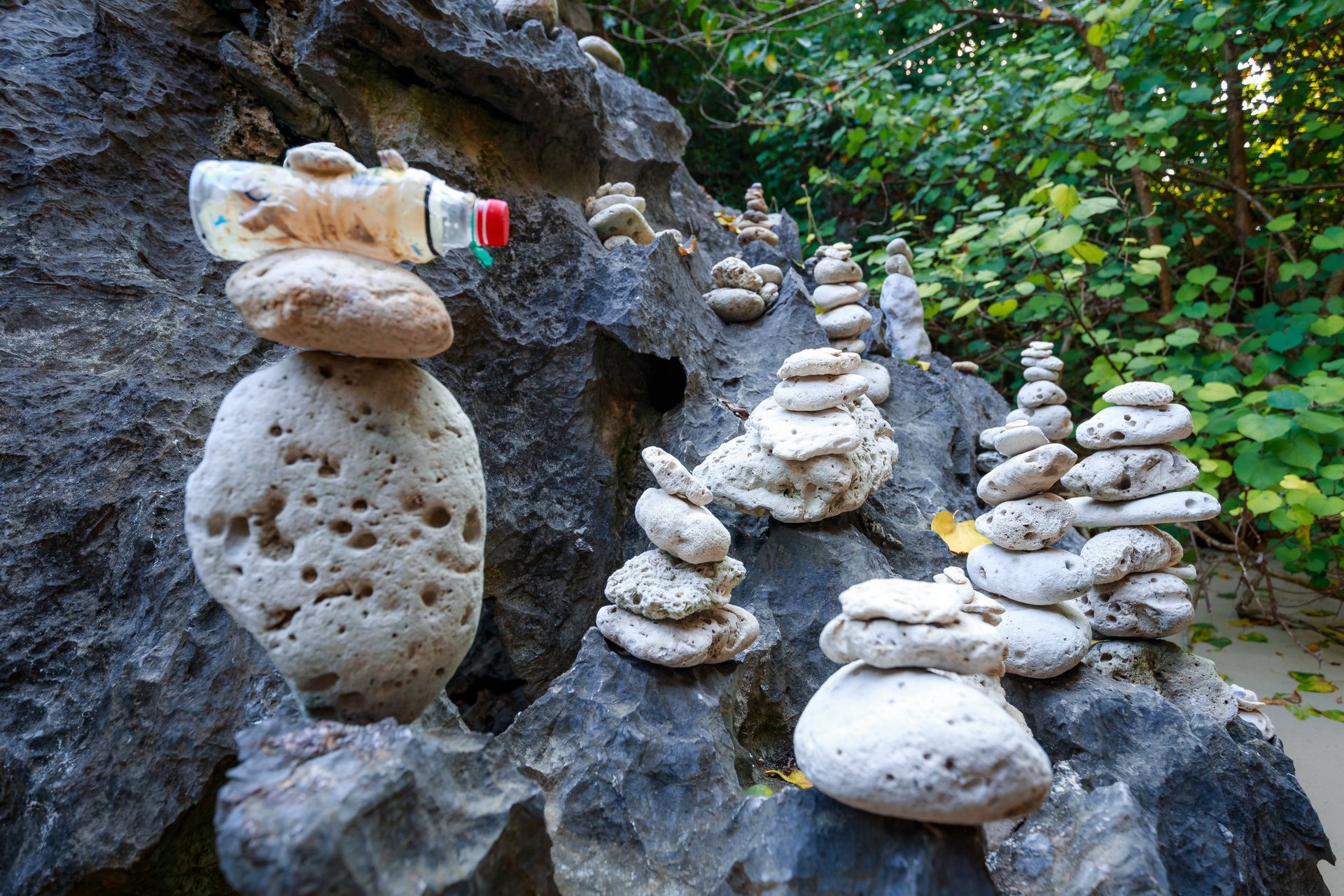
Most travelers come to Cat Ba for the bay and only discover the forest by accident. That's a mistake we'd like to fix. Cat Ba National Park covers more than 17,000 hectares of limestone jungle in the heart of the island — a UNESCO Biosphere Reserve since 2004, home to over 3,800 recorded species, and the only place on Earth where the Cat Ba langur still survives in the wild. You can drive past it in twenty minutes, or you can walk into it and understand why we built half our tours around it.
This is our field guide: what's actually inside the park, what each trail demands, and how to do it without turning a great day into a hard one.
The basics before you go
The park entrance sits on the cross-island road, about 15 minutes by scooter or taxi from Cat Ba Town. Entry costs 80,000₫ for adults and 40,000₫ for children and students, paid at the gate. Gates open early — and early is exactly when you want to be there, before the heat settles into the valleys.
Two rules we hold our own groups to: never trek alone, and carry out every piece of trash you carry in. The park is a functioning sanctuary, not a photo backdrop.
Ngu Lam Peak — the one-hour reward
If you only have a morning, this is your hike. The trail to Ngu Lam Peak starts near the park headquarters and climbs steadily through Kim Giao forest — a stand of ancient hardwood trees whose timber was once reserved for royal chopsticks, prized because it was said to darken on contact with poison.
The climb takes about an hour at a normal pace. The last stretch gets rocky and steep, and then the canopy breaks and you're looking out over an ocean of green karst peaks rolling to the horizon. On a clear day it's the best land-based viewpoint on the island, full stop.
Trung Trang Cave — 300 meters under the karst
A few minutes down the road from the main gate, Trung Trang Cave runs more than 300 meters through the limestone, strung with stalactites that have been growing drip by drip for millennia. It's an easy add-on to a morning hike — bring a light layer, watch your head on the low sections, and let your eyes adjust. The formations near the deepest chamber are the ones worth slowing down for.
We combine Ngu Lam Peak and the cave system on our half-day National Park trek — about four hours door to door, guided by people who walk these trails every week.
The cross-island trek to Viet Hai — the big one
This is the route we consider the single best day of hiking in northern Vietnam's islands: 10–12 kilometers from the park headquarters across the spine of the island to Viet Hai, a fishing-and-farming village tucked in a valley that stayed off the grid until remarkably recently. Expect 4–6 hours of real trekking — jungle switchbacks, a mountain pass, then rice fields and village lanes on the far side.

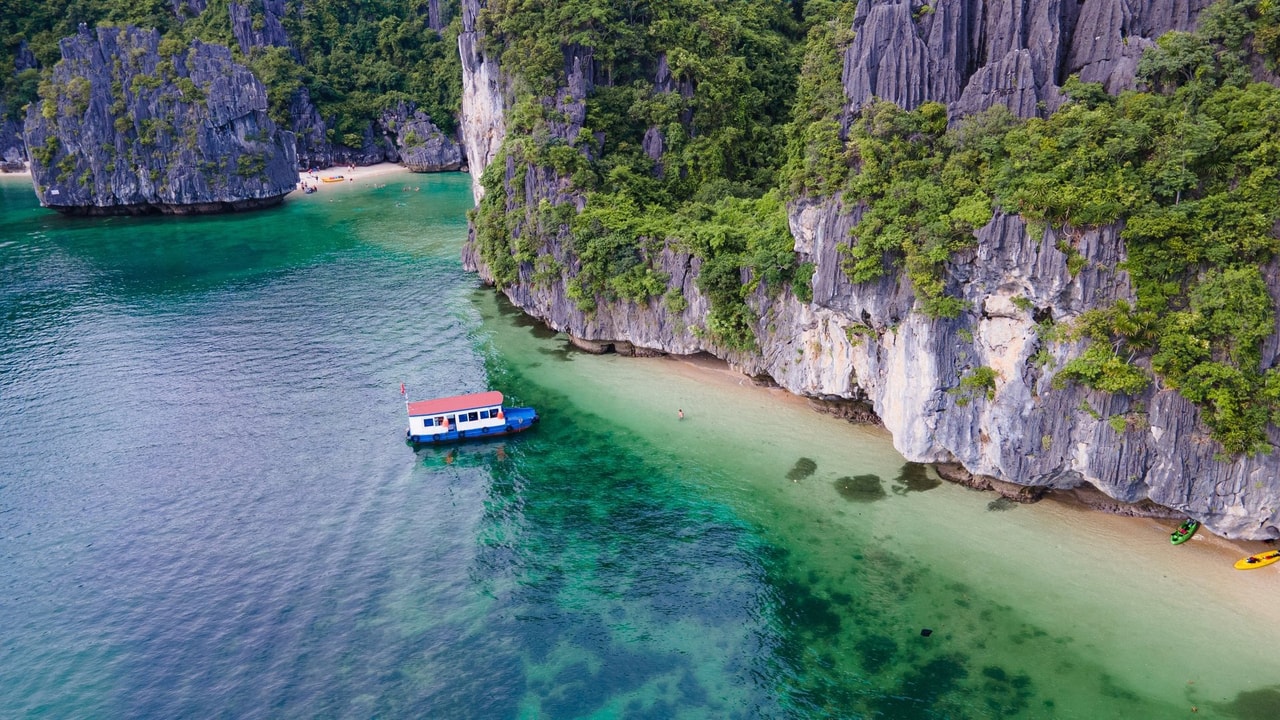
The payoff is the arrival. Viet Hai sits between the forest and Lan Ha Bay, and finishing the trek with a cold drink in the village before a boat picks you up on the water side is the kind of day that reorganizes your memory of Vietnam. That's exactly how we run our full-day National Park & Viet Hai trek — forest in, boat out.
Want the deeper story on the village itself? We wrote a full guide: Viet Hai Village — Cat Ba's hidden valley.
When to come
- April to October — warm and green; start early to beat the midday heat, and expect the occasional afternoon shower that leaves the forest steaming and beautiful.
- November to March — cooler, drier, quieter. Arguably the best trekking window if you don't mind a grey sky now and then.
What to wear and bring
The park is jungle, and jungle keeps score. Our short list, learned the sweaty way:
- Proper shoes with grip — trail runners or hiking boots. The limestone gets slick.
- Lightweight long layers that dry fast; the undergrowth has opinions.
- More water than you think you need, plus a hat and sunscreen for the exposed sections.
- Insect repellent, especially in the wet months.
- A dry bag for your phone if you're continuing onto the water.
Where to sleep so the forest is close
Skip the town-center shuffle. Our Uncommon Stay cabins put you on the quiet side of the island with the park practically over the fence — you can be at the trailhead before the tour buses have finished loading. And if you'd rather wake up on the bay you just hiked to, our Lan Ha Floating Homestay sits right on the water near Viet Hai, which makes it the perfect landing spot after the cross-island trek.
The honest summary
Cat Ba National Park rewards effort in direct proportion. An hour gets you Ngu Lam's view. Half a day gets you the peak and a cave system. A full day gets you the cross-island trek and a boat ride home across Lan Ha Bay — and that combination, forest to water in a single arc, is the island at its absolute best. Come walk it with us.



Comments
No comments yet — ask a question or share a tip below.