
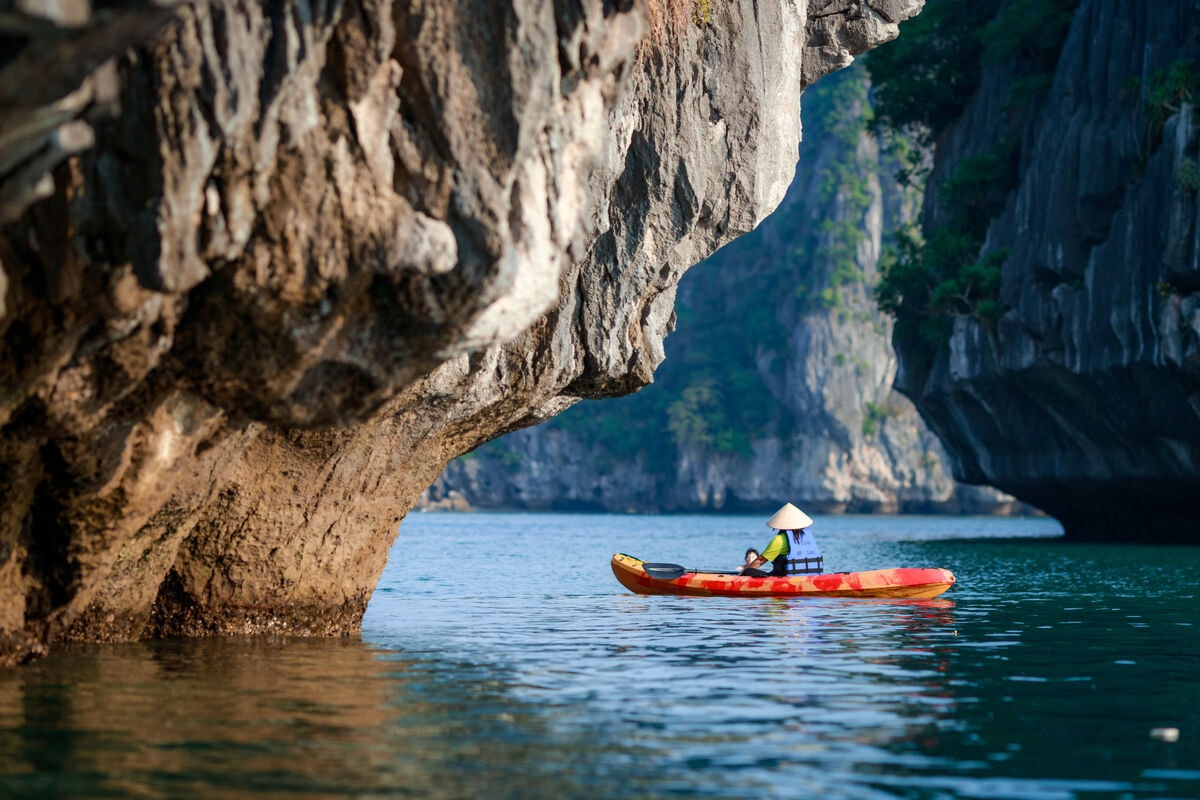
Ask five of our guides for their favorite place to kayak in Lan Ha Bay and you'll get five different answers — and then a twenty-minute argument. That argument, distilled, is this article. These are the five paddles we come back to season after season: a cave tunnel that opens into a hidden lagoon, a beach that exists only at low tide, a floating village older than most countries, and a night route where the water itself glows. If you're planning your kayak experience in Lan Ha Bay, start here.
Route 1: Dark & Bright Cave — the tunnel everyone remembers
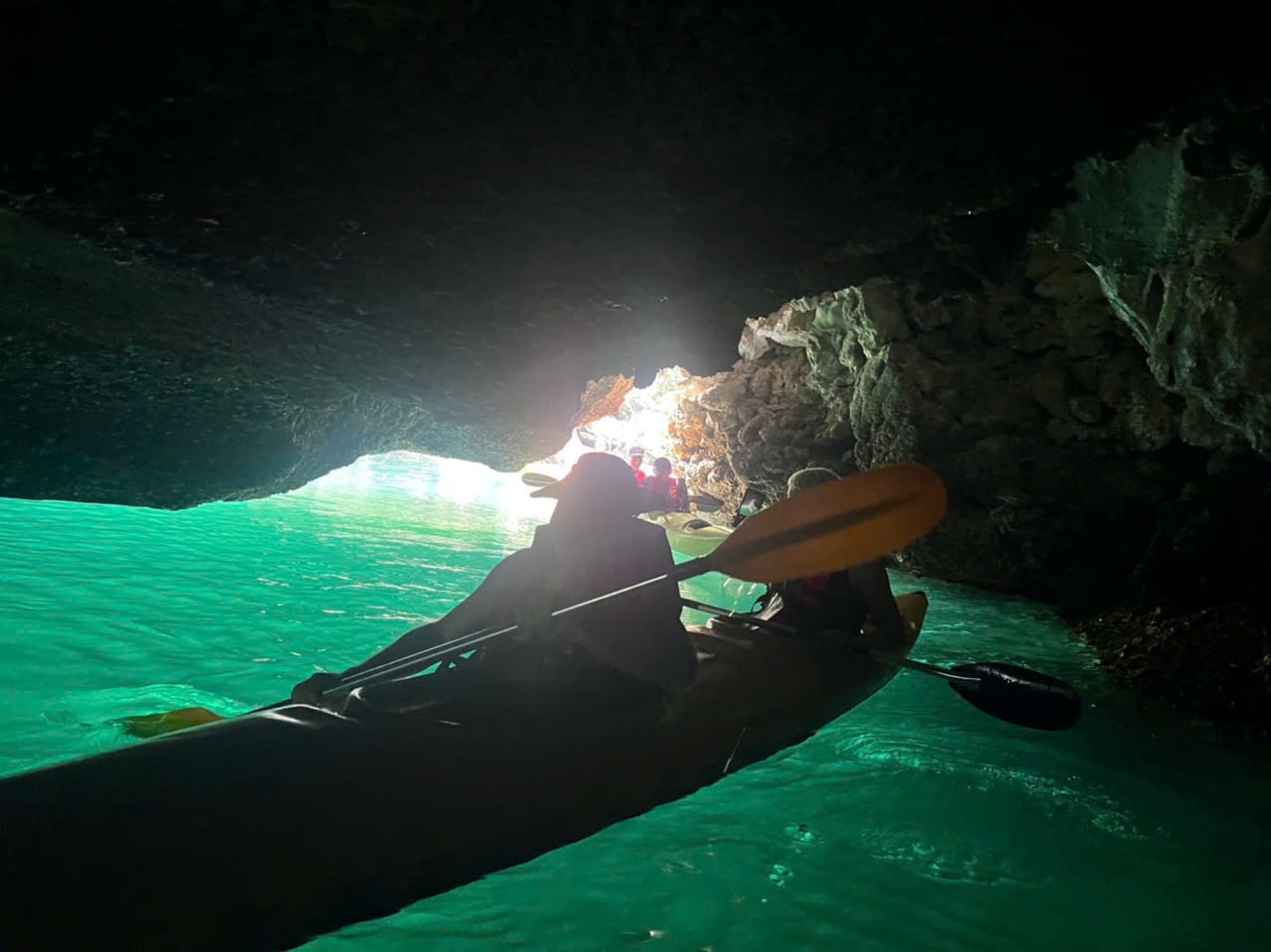
The signature paddle of the entire bay system. You enter a low limestone tunnel — headroom drops to a couple of meters, so you duck, drift and let the current carry you — and after a stretch of half-darkness the ceiling lifts and you glide out into a lagoon walled by cliffs on every side. Green water, hanging vines, birdsong bouncing off the rock. People go quiet in there; it happens every single trip.
full-day ECO cruise & kayak trip — Not on sale right now
Good to know: easy paddling, moderate nerve required in the dark section. Kids love it. Bring nothing you can't get wet.
Route 2: Ba Trai Dao — three peaches and a disappearing beach
Three peach-shaped islets rise out of the southern bay, hiding a crescent of white sand that the tide swallows twice a day. Paddle the loop around the islets, then land on the beach if the sea allows — at the right hour it's one of the most beautiful spots in northern Vietnam, and at the wrong hour it simply doesn't exist. That impermanence is the charm.
We've written a full guide to Ba Trai Dao — the tides, the swimming, the photography. As a kayak route it's gentle, open-water paddling with the best scenery-per-stroke ratio in the bay.
Good to know: the beach window is a few hours around low tide. Swimming here on a calm day is unforgettable.
Route 3: Van Boi lagoon — the swim-stop paddle
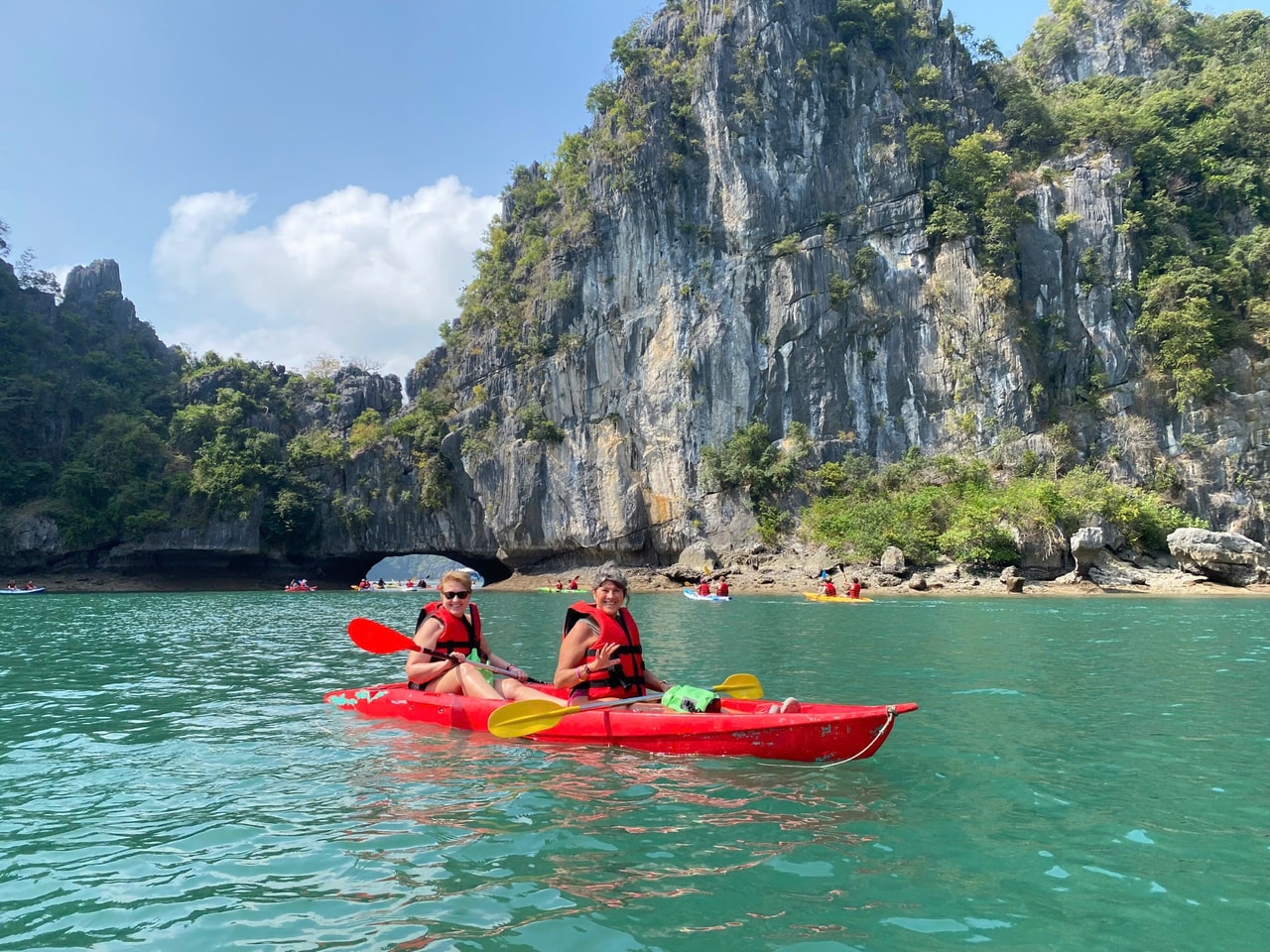
Van Boi is where we go when guests want water clear enough to see their own feet. A sheltered lagoon and a quiet beach sit beneath sea cliffs, out of the boat lanes, and the paddling is calm enough for total beginners. This is the route for families, for couples who want an unhurried hour, and for anyone whose ideal kayak trip includes more floating than paddling.
Most of our day cruises pair Van Boi or Ba Trai Dao as the swim stop, depending on tide and wind that day — another decision better made by the boat crew than by a fixed itinerary.
Good to know: easiest route on this list. Snorkel mask worth packing.
Route 4: Cai Beo floating village — paddling through living history
Cai Beo has been continuously inhabited for thousands of years — archaeologists date settlement here back millennia — and a few hundred people still live on the water today, farming fish in floating cages between the karsts. By kayak you move through it at the village's own speed: past house-boats with dogs dozing on the porches, fish farms, and the odd rowing sampan heading out to check nets.
Paddle respectfully — this is a neighborhood, not a theme park. Wave, buy a drink if someone's selling, keep your distance from working cages. It's the most culturally rich hour you can spend in a kayak in Vietnam, and because it starts near Ben Beo pier, it's also the easiest to do on a budget rental — see our kayak rental guide for prices.
Good to know: flat, protected water. Morning light is best for photos; late afternoon for atmosphere.
Route 5: the night paddle — kayaking through glowing water
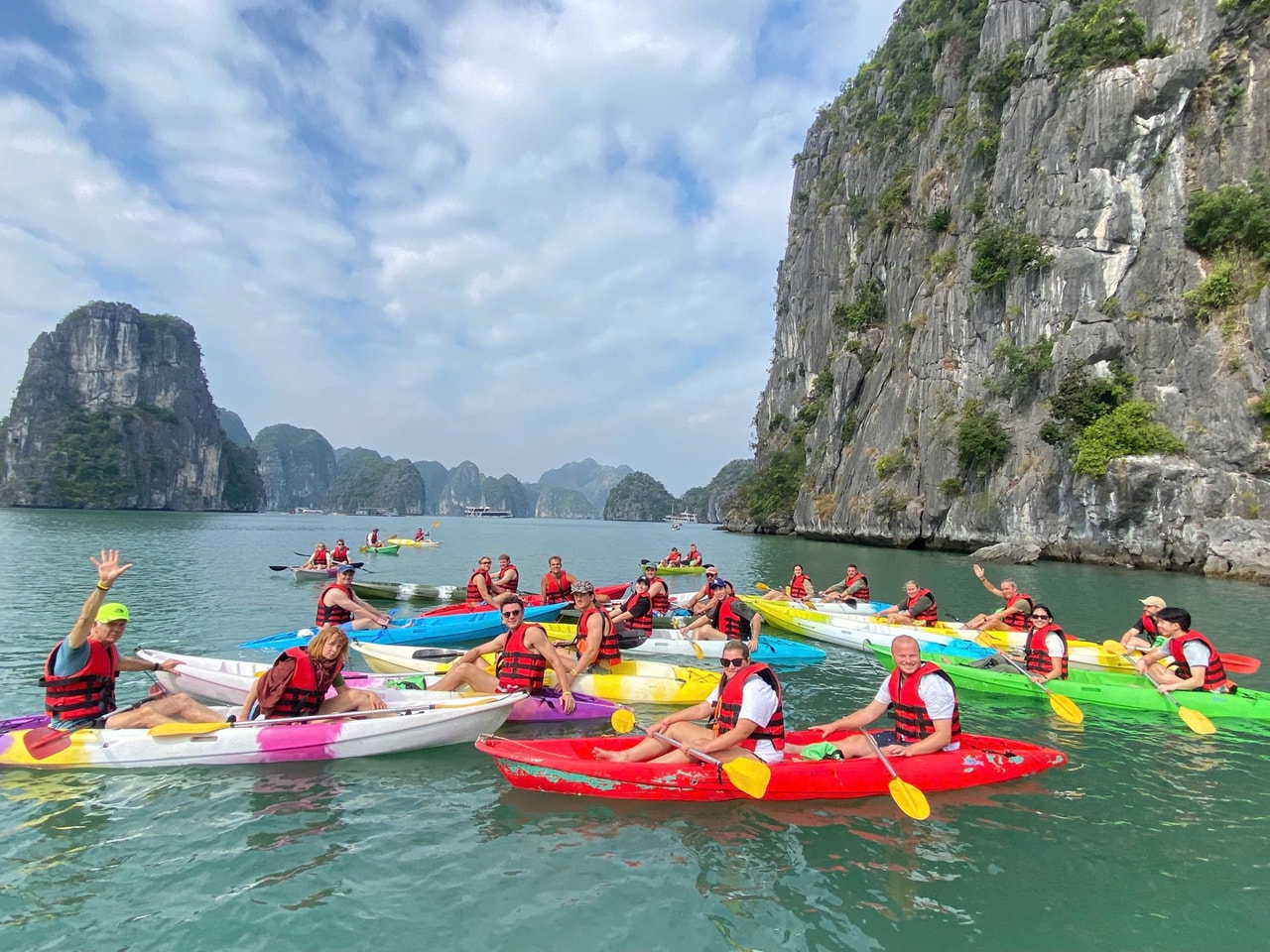
Standalone plankton trips and night kayaking are currently not permitted. Overnight cruises are the exception, but this does not mean night kayaking is included or that plankton sightings are guaranteed. We are not accepting bookings for the standalone night tour.
The five routes at a glance
| Route | Time in kayak | Difficulty | Best condition |
|---|---|---|---|
| Dark & Bright Cave | 45–60 min | Easy, one dark stretch | Mid-tide, calm day |
| Ba Trai Dao islets | 60–90 min | Easy–moderate (open water) | Low tide for the beach |
| Van Boi lagoon | 30–60 min | Easiest | Any calm day |
| Cai Beo village | 60–90 min | Easy, flat water | Morning or golden hour |
| Night bioluminescent paddle | — | — | Not on sale right now |
When to come, and how to string them together
April to October gives you warm water and long days — with June to September carrying a chance of afternoon storms, so keep your schedule flexible. November to March is cooler, drier and gloriously quiet; pack a windbreaker and you'll have lagoons to yourself.
You can't paddle all five in one day — the bay is too big, and honestly, you shouldn't want to. A full-day cruise covers two or three routes with swimming and lunch between; add the night paddle as a second evening and you've had the complete Lan Ha kayak experience in two days. Staying longer? Our 2-day Lan Ha Bay Explorer sleeps you over the water at a floating homestay between paddles, and the 3-day itinerary fits the trekking side of the island around it.
Whichever routes you pick, you'll understand the guides' twenty-minute argument. There's no wrong answer in this bay — only water you haven't paddled yet.

Comments
No comments yet — ask a question or share a tip below.