
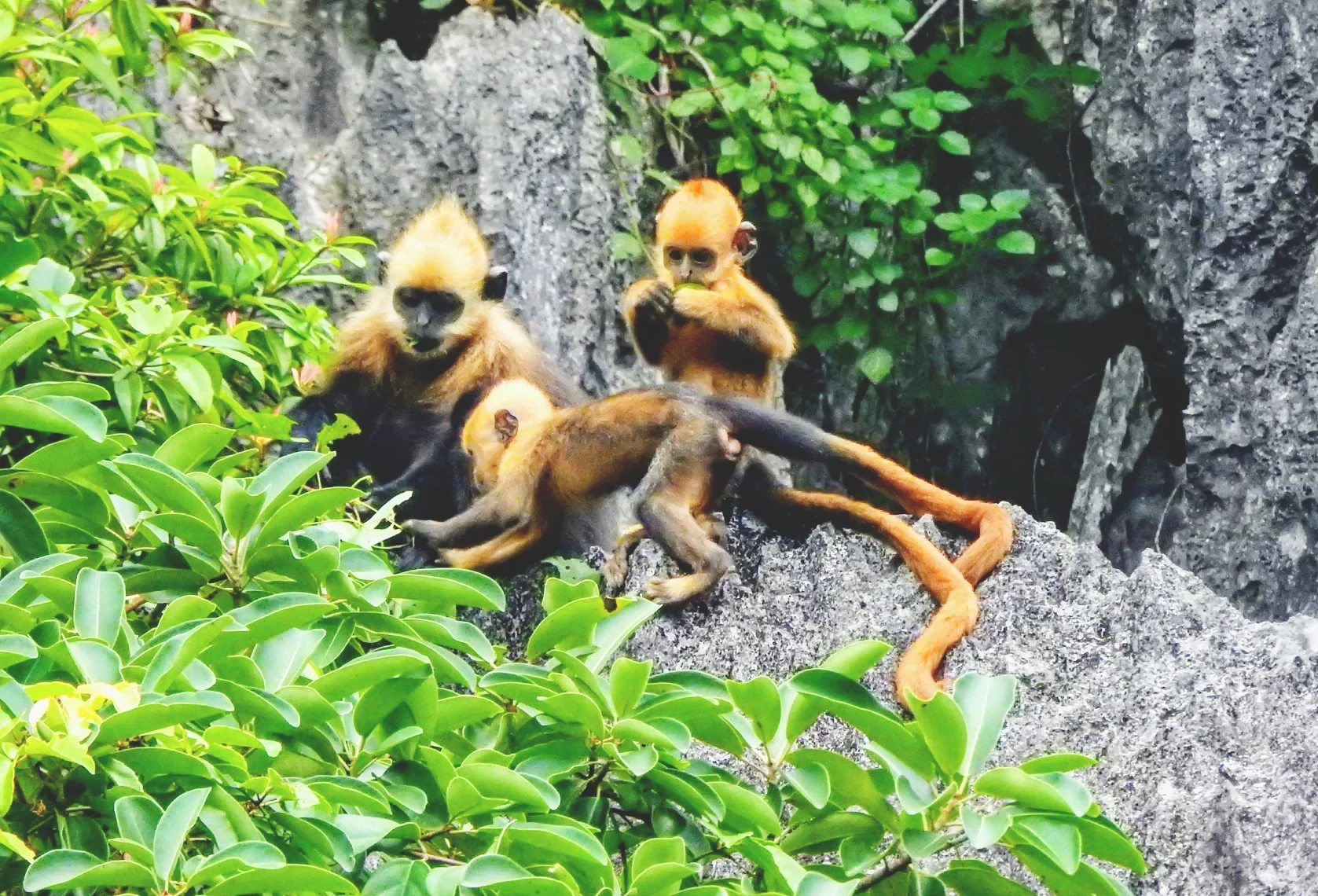
The Cat Ba langur is one of the rarest monkeys in the world, found only on Cat Ba Island in northern Vietnam. Its small population makes sightings unlikely, but knowing its story will change how you experience the island. Here are seven things to know before you visit.
1. It Lives on One Island and Nowhere Else
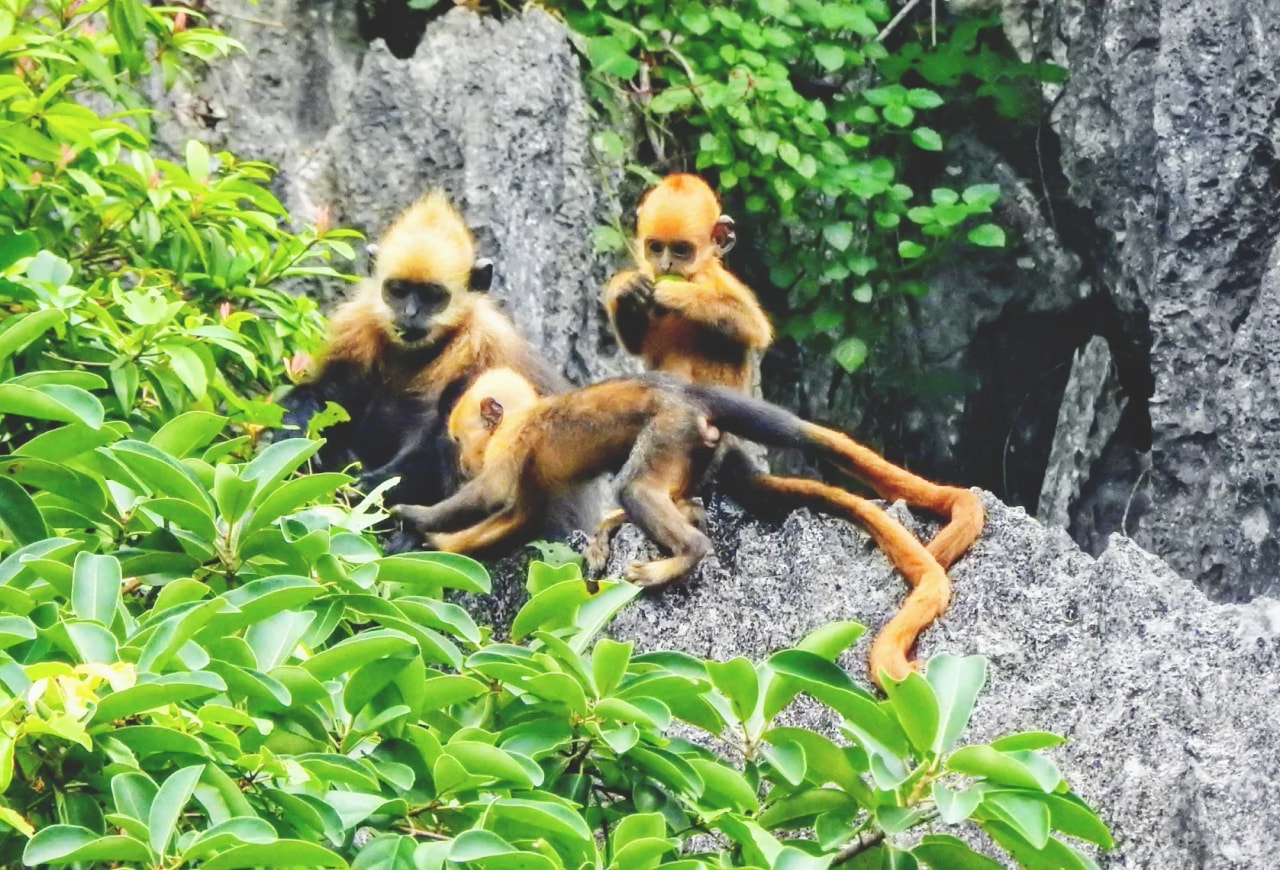
The Cat Ba langur (Trachypithecus poliocephalus) is found only in the Cat Ba Archipelago in Hai Phong, northern Vietnam. That makes it one of the most geographically limited primates in the world. Its golden crown and shoulders stand out against a dark body, and babies are born bright orange.
2. It Came Back From the Brink
Conservation work has helped this very small population recover from its low point. A 2023–2025 primate conservation assessment reported numbers in the low 90s by mid-2024. This is a dated conservation estimate, not a live 2026 census. Population figures change as births, deaths and monitoring records are updated.
3. Small Family Groups, Big Fragility
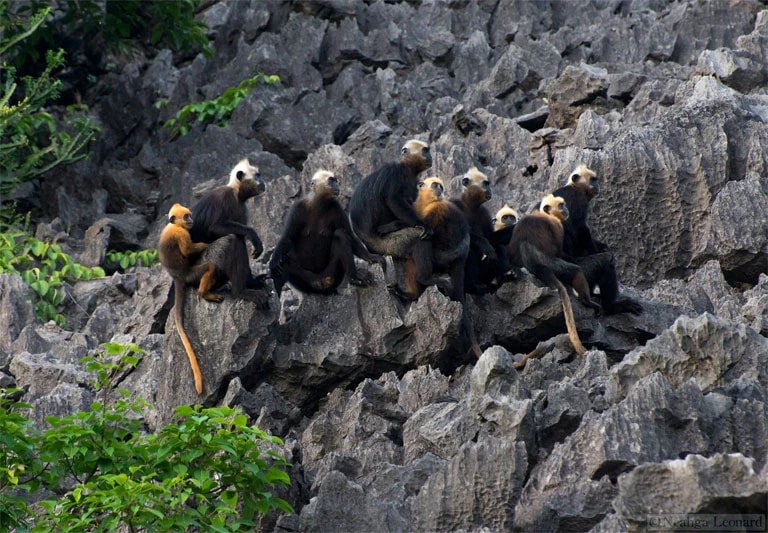
Langurs live in small family groups, typically one adult male with several females and their young. Researchers have estimated an average group size of about six, with only around ten or eleven groups in total. With so few animals, a single hunting incident or disturbance can still hurt the whole population.
4. You Probably Won't See One (and That's Okay)
The langurs sleep on steep cliffs and in caves, avoid people, and live mainly inside protected zones closed to the public. No responsible tour can promise a sighting. If you do catch a glimpse from a boat or kayak, count it as a rare gift.
5. The Monkeys on the Beach Are Not Langurs
Those bold primates that approach tourists at beaches are macaques. They are used to humans and food. A real langur keeps its distance and stays high above the water.
6. There Is Plenty of Other Nature to Enjoy
Cat Ba is a UNESCO-recognized biosphere reserve with hundreds of limestone islands, mangroves, coral, and birdlife. Expect sea eagles, kingfishers, and dramatic karst scenery. Kayaking and small-boat trips are the best ways to explore quietly.
7. Your Behavior Really Matters
Simple habits protect these animals:
Keep your distance and stay quiet
Never feed wildlife
Keep drones on the ground near cliffs
Don't share exact sighting locations online
Choose operators that respect protected zones
FAQ
How many Cat Ba langurs are left?
A published 2023–2025 conservation assessment recorded a population in the low 90s by mid-2024. Check the conservation project for a current count; this guide does not claim a live census.
Where is the best place to look for them?
Along the coastal limestone cliffs, seen from the water. Sightings are never guaranteed.
Is it legal to enter langur habitat?
No. Core areas are Special Protection Zones with restricted access.
Are Cat Ba langurs really critically endangered?
Yes. They are listed as Critically Endangered on the IUCN Red List.
Plan Your Onward Trip
Explore Cat Ba responsibly with a Lan Ha Bay day tour or read about Cat Ba National Park. Wildlife sightings cannot be guaranteed.
Travel details can change. Confirm current access, schedules and third-party charges locally before making a special journey.
Conservation Sources
Read the Cat Ba langur species assessment in Primates in Peril 2023–2025 and Zoo Leipzig’s conservation project overview.



Comments
No comments yet — ask a question or share a tip below.