
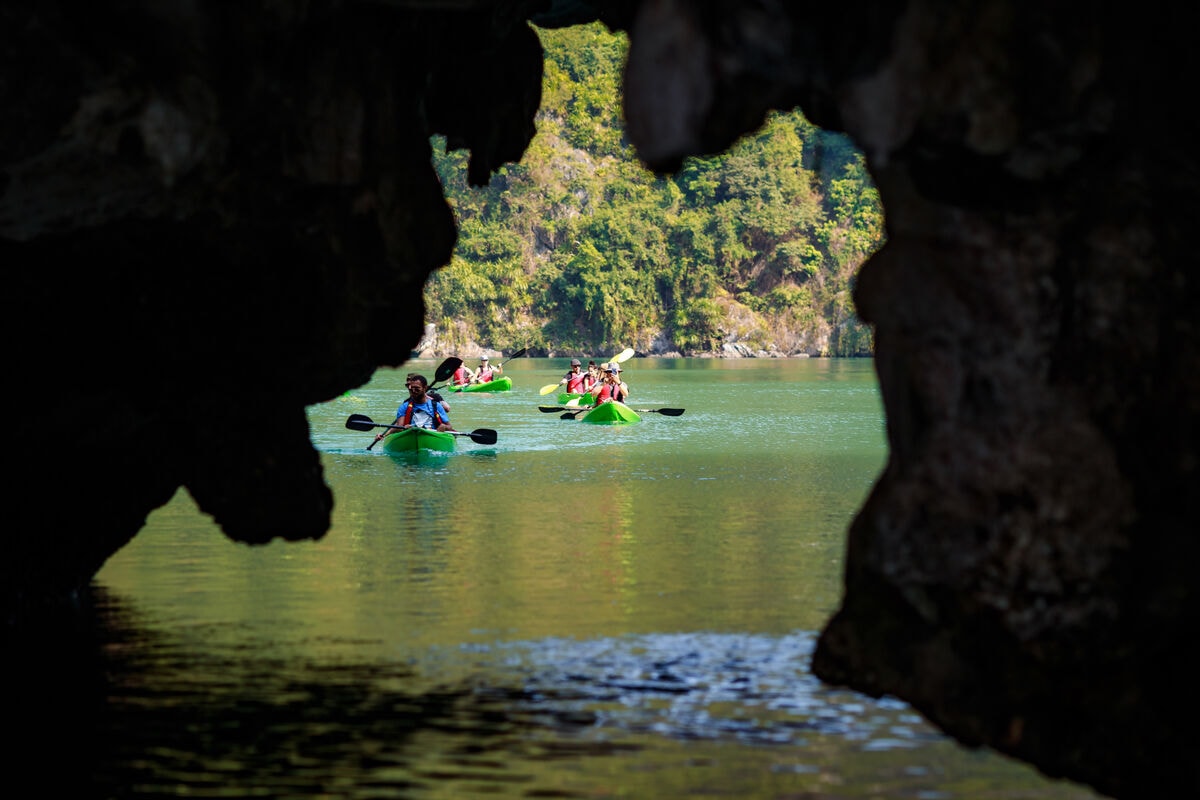
Every week, someone walks into our office with the same plan: "We want to go kayaking in Ha Long Bay." And every week we ask the same question back: do you want the name, or do you want the paddle? Because the limestone karsts don't stop at the line on the map — Ha Long Bay and Lan Ha Bay are one continuous seascape, and the kayaking on the two sides of that line is a very different experience. Here's the honest comparison, from a team that grew up on the Lan Ha side and has paddled both.
The short answer
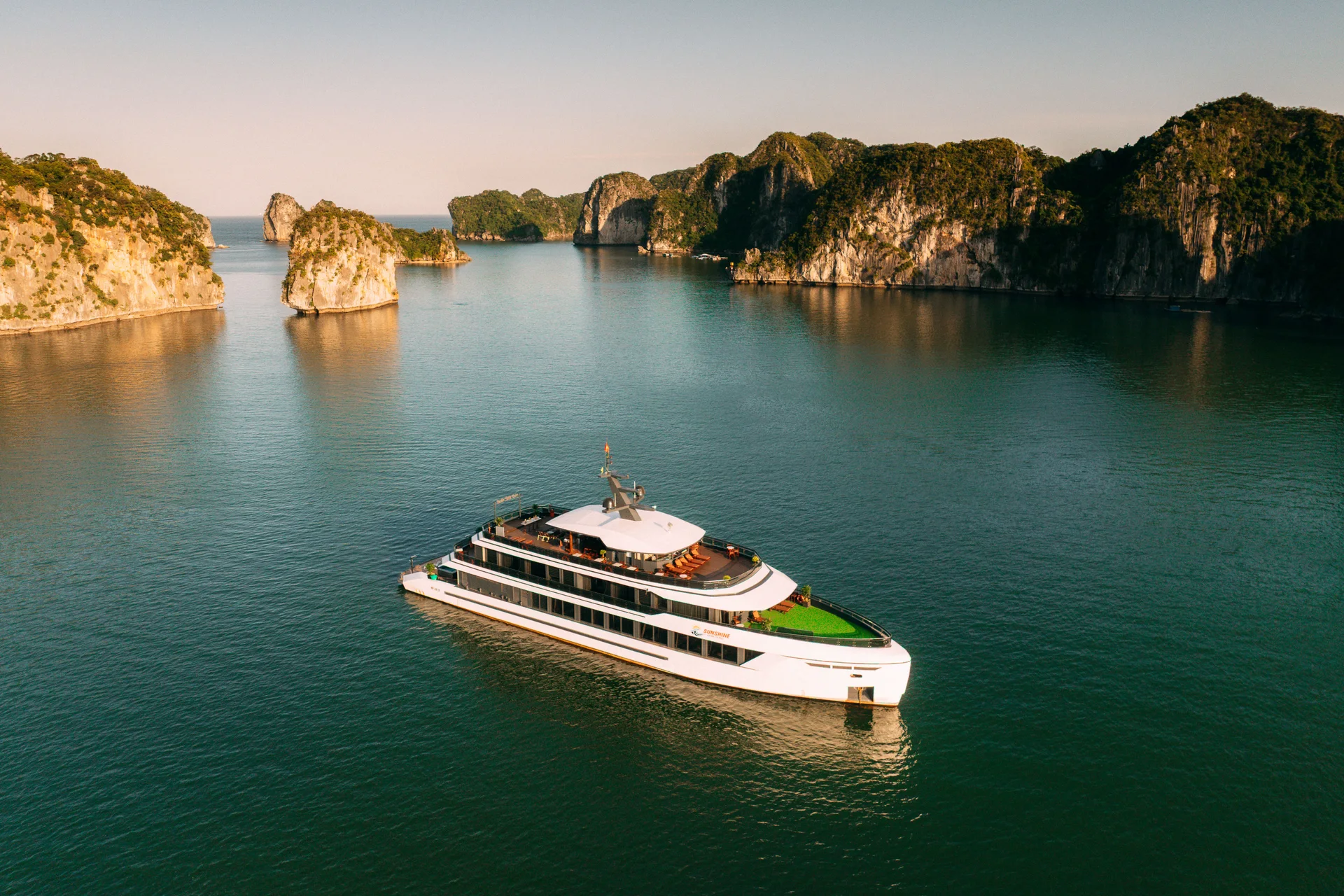
Kayaking Ha Long Bay means paddling in designated zones, on a schedule, usually as a stop on a cruise itinerary, sharing the water with the busiest cruise fleet in Vietnam. The scenery is world-famous for a reason — Luon Cave's tunnel and the Ba Hang lagoons are genuinely beautiful.
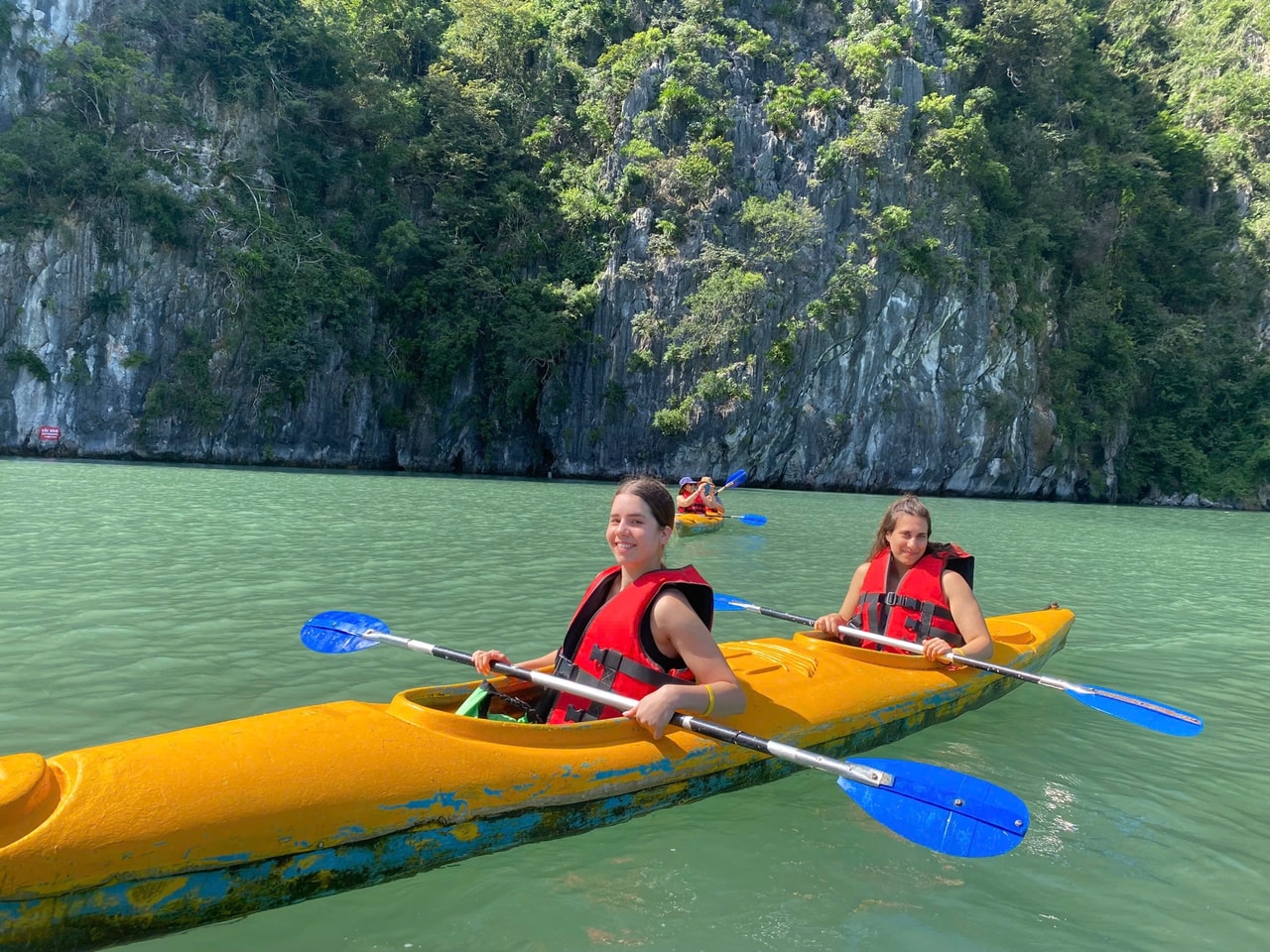
Kayaking Lan Ha Bay means the same karst towers and emerald water with a fraction of the boats, longer time in the kayak, and spots — cave tunnels, tidal beaches, floating villages — where yours is often the only group in sight.
If kayaking is the point of your trip rather than a 25-minute photo stop, Lan Ha wins. Let us show our work.
Kayaking in Ha Long Bay: what the rules actually say
Ha Long's kayaking history explains its present. In April 2017, provincial authorities banned kayaking in the bay entirely, citing environmental and management concerns. It came back a month later — but only in designated areas, a system that has defined Ha Long kayaking ever since. The original list included Luon Cave, Ba Hang, Cong Do, and the Cua Van and Vung Vieng floating village areas, and today's management plan still works the same way: mapped kayaking zones, licensed operators, certified equipment, and guide ratios for cruise groups.
None of this makes Ha Long kayaking bad. It makes it managed. You'll paddle a beautiful, well-chosen zone for the time slot your cruise has scheduled, alongside however many other boats have scheduled the same zone. In peak season at Luon Cave, that can mean a queue of kayaks and bamboo rowboats moving through the tunnel like polite traffic.
What it's not is free-range. Solo kayaking is restricted, paddling outside the zones risks fines for your operator, and the itinerary belongs to the cruise, not to you.
Kayaking in Lan Ha Bay: the same sea, set loose
Lan Ha Bay sits immediately south of Ha Long, administered from Cat Ba Island — same geology, same green water, roughly 400 islands of its own. Because it carries far less boat traffic, kayaking here still feels like exploration rather than a managed attraction. Day boats out of Cat Ba drop kayaks at the Dark & Bright Cave tunnel, the Ba Trai Dao islets, and the Van Boi lagoon, and you paddle until your arms are honestly tired, not until a schedule says stop.
The numbers tell the crowd story: Ha Long hosts one of the largest cruise fleets in Asia, while Lan Ha sees on the order of 100–180 boats spread across a bay the size of a small sea. Even in August you can paddle into a lagoon behind Ba Trai Dao and hear nothing but your own paddle drips.
Cost, crowds, and access compared
| Ha Long Bay | Lan Ha Bay | |
|---|---|---|
| Kayaking style | Designated zones, scheduled stops | Open paddling at multiple spots |
| Sightseeing ticket | ~260,000–310,000₫ day routes; more for overnight routes | ~120,000₫ |
| Boat traffic | Heaviest in Vietnam | A fraction of Ha Long's |
| Typical kayak time | 20–40 minutes per stop | 1–3 hours across a day |
| Signature kayak spots | Luon Cave, Ba Hang, Cong Do | Dark & Bright Cave, Ba Trai Dao, Van Boi, Cai Beo village |
| Getting there | Cruise from Tuan Chau / Ha Long City | Day boat or cruise from Cat Ba Island |
Prices shift year to year — treat these as early-2026 ballparks — but the ratio has held for a decade: Lan Ha costs less and gives you more time on the water.
The spots, honestly rated
Luon Cave (Ha Long). A 60-meter tunnel into an enclosed lagoon with monkeys on the cliffs. Genuinely lovely, genuinely crowded. If your cruise stops here, do it — just don't expect solitude.
Ba Hang (Ha Long). A pocket of lagoons near the Ba Hang fishing village, close to the main cruise lanes. Pretty, convenient, busy.
Dark & Bright Cave (Lan Ha). The best kayak tunnel in either bay, full stop — a long, low passage that opens into a cliff-ringed lagoon, timed around the tide. This is the one paddlers remember.
Ba Trai Dao (Lan Ha). Three peach-shaped islets guarding a tidal beach that only exists a few hours a day. We wrote a whole guide to it.
Van Boi (Lan Ha). Clear-water lagoon and a quiet beach below sea cliffs — the swim-and-paddle combination at its best.
Cai Beo floating village (Lan Ha). Paddle through one of Vietnam's oldest floating communities, past fish farms and house-boats. Culture from water level; no zone ticket, no queue.
So which one should you choose?
Choose Ha Long if the UNESCO name matters to you, you've already booked an overnight cruise there, or you want kayaking as a garnish on a bigger cruise experience. It will not disappoint on scenery.
Standalone plankton trips and night kayaking are currently not permitted. Overnight cruises are the exception, but this does not mean night kayaking is included or that plankton sightings are guaranteed. We are not accepting bookings for the standalone night tour.
And here's the quiet secret: you don't really have to choose. Boats from Cat Ba routinely cross the administrative line, so a good Lan Ha itinerary shows you Ha Long's karst scenery anyway — minus the queue at the cave mouth. If you're coming from the Ha Long side, the Tuan Chau ferry makes the hop to Cat Ba easy; paddle both bays in one trip and settle the debate yourself.

Comments
No comments yet — ask a question or share a tip below.