
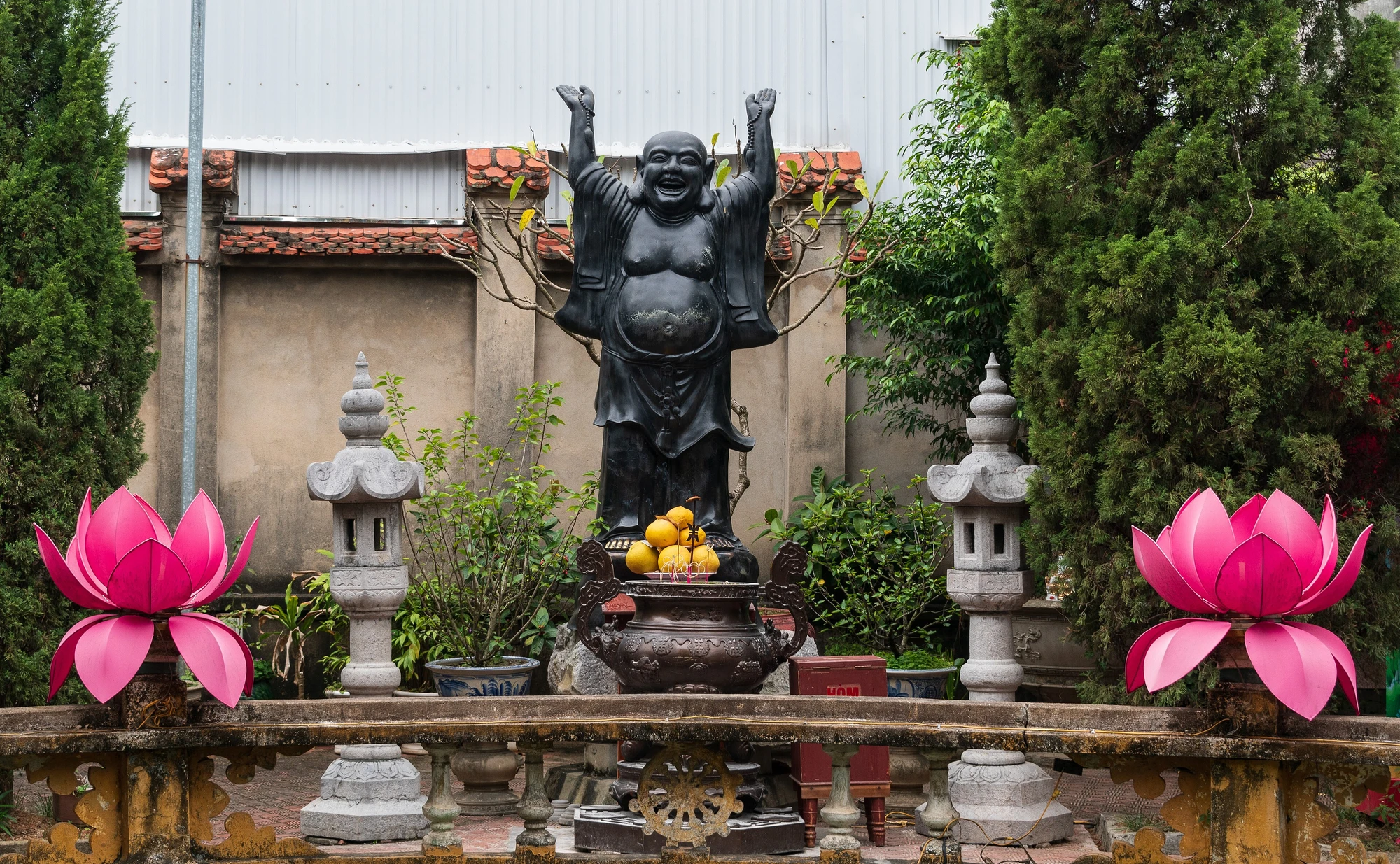
Ask most travelers what they know about Hai Phong and the answer is usually “the food,” and for good reason. But beneath the sizzling street stalls lies a city with a deeper story, one shaped by medieval emperors, Buddhist monks, legendary generals, and French architects. If you have already eaten your fill of crab noodle soup and want to understand what makes this port city tick, a Hai Phong cultural heritage tour is the perfect next step. The four sites below form a natural journey through time, and together they show how many layers of history are packed into one coastal city.
Why Hai Phong Is a Surprisingly Rich Destination for History Lovers
Hai Phong has always been a crossroads. Its harbor drew traders and colonial powers, while its coastline, especially around the Do Son peninsula, has been sacred ground for centuries. The result is a landscape where a Gothic European building, an ancient pagoda in the middle of a busy neighborhood, and a hilltop tower overlooking the sea all exist within a short drive of one another. Best of all, these places are far less crowded than comparable heritage sites in Hanoi or Hue, which means you can wander at your own pace and actually take in the atmosphere.
The route is also easy to organize. Two sites sit in the city center, while the other two are in Do Son, roughly 20 km away, so a single day with a hired driver or ride-hailing app covers everything comfortably.
1. Hai Phong Museum: A Colonial Gothic Building Holding the City’s Memory
Start your day at the Hai Phong Museum on Dien Bien Phu Street, because it gives you the context for everything else you will see. The building itself is a landmark: constructed in the early 20th century in a European Gothic style, with pointed arches, a symmetrical facade, and heavy columns, it originally served as the Franco-Chinese Bank during the French colonial period. Sources differ on the exact construction date, with some giving 1919, but all agree on its colonial origins and its striking appearance.
Hugo Heimendinger / Pexels License · Source · Adapted
The museum opened to the public in December 1959 and is widely described as the first local museum in Vietnam. Inside, exhibition rooms trace the city’s story from prehistoric times to the modern era, covering natural history, the defense of the country, local traditions, and the daily culture of the port city. The collection is large, with some sources citing tens of thousands of items, so give yourself at least an hour. Admission has been reported as free, but opening hours vary between sources, so confirm the schedule before you go. Even if the doors are closed, the architecture alone makes the stop worthwhile for photographers.
2. Du Hang Pagoda: A Thousand Years of Calm in the Middle of the City
From the museum, head to Du Hang Pagoda (also called Phuc Lam Tu), tucked away at 121 Du Hang Street in Le Chan ward. It is one of the oldest Buddhist temples in Hai Phong, with origins traced to the Early Le dynasty (980–1009), and it was officially recognized as a national historical and cultural relic in 1986. What surprises many visitors is the contrast: step through the gate and the traffic noise fades, replaced by incense, shaded courtyards, and the slow rhythm of worshippers.
Architecturally, the pagoda shows the traditional northern Vietnamese style, with layered tiled roofs, carved wooden details, and a harmonious layout, and much of what you see reflects the artistic style of the Nguyen dynasty. The temple has been renovated many times, yet it has kept its ancient character. It has also played a part in the country’s modern history, having served as a gathering place during resistance periods. Visit in the late morning or early afternoon, dress modestly with covered shoulders and knees, and keep your voice low. If you are lucky enough to arrive during a festival or on the first or fifteenth day of the lunar month, the atmosphere is especially vivid.
3. Tuong Long Tower: Ly Dynasty Heritage with a Sea View
After lunch, drive out to Do Son, where the second half of the journey begins. Tuong Long Tower stands on Long Son hill, and its story goes back to the Ly dynasty. According to historical records, Emperor Ly Thanh Tong ordered a tower built here in 1058 and, after a golden dragon was reported to have appeared, named it Tuong Long, meaning “auspicious dragon.” The original was one of the grandest Buddhist structures of its time, often mentioned alongside the Bao Thien Tower in Thang Long, the old capital. It was also valued as a lookout point guarding the coast.
Quang Nguyen Vinh / Pexels License · Source · Adapted
The original was repeatedly restored over the centuries but was eventually torn down in the early 1800s, when its bricks were reused for a citadel elsewhere. Archaeologists excavated the foundation in 1978, and the tower you see today is a faithful reconstruction, rebuilt over about a decade and completed in 2017. It rises nine stories, is clad in ceramic bricks that echo Ly-era materials, and houses a statue of Amitabha Buddha on the ground floor. Climb up and you will be rewarded with sweeping views of Do Son’s coastline, green hills, and fishing life below. Next to the tower, a small building shelters excavated artifacts, which is a great bonus for history lovers. Stay until dusk if you can, because the tower is lit up in the evening, and visitors often write wishes on paper to hang on the tree at its foot.
4. Tran Temple: A Quiet Place to Slow Down in Do Son
Finish your tour at Tran Temple, also in Do Son. It was built in 1824, during the reign of Emperor Minh Mang, and is dedicated to Tran Hung Dao, the 13th-century commander who led Vietnam’s forces against Mongol invasions and is revered across the country as a national hero. The temple’s setting is relaxed and contemplative, making it an ideal final stop after a full day of sightseeing.
One practical note: the temple was seriously damaged in a storm and has since been restored; the restored temple was inaugurated on 25 October 2026. Check recent local information before you go. Even so, it is worth including, because it shows another side of Vietnamese heritage: not just grand monuments, but community shrines kept alive by local people over generations.
A Simple One-Day Itinerary
Begin at the Hai Phong Museum in the morning to learn the background, then walk or ride to Du Hang Pagoda for a quiet late-morning visit. Have lunch in the city, since this is Hai Phong after all, and a bowl of banh da cua is the obvious choice. In the afternoon, drive to Do Son to climb Tuong Long Tower for the view, then finish at Tran Temple as the day winds down. If you have energy left, stay for sunset by the sea and a seafood dinner in Do Son.
Practical Tips for Visitors
- Getting around: The city sites are close together, while Do Son is about 20 km away. A private driver or ride-hailing app is the simplest option.
- Dress code: Cover shoulders and knees at the pagoda and temple, and remove shoes where indicated.
- Timing: Check opening hours for the museum in advance, as published schedules vary. Aim to leave Do Son before heavy traffic builds in the evening.
- Weather: Mornings and late afternoons are the most comfortable for climbing the tower and walking temple grounds.
- Combine with food: Pair this tour with the street foods from our Hai Phong food guide for a complete day.
Frequently Asked Questions
What are the best historical sites in Hai Phong?
Hai Phong Museum, Du Hang Pagoda, Tuong Long Tower, and Tran Temple are four strong choices, covering colonial, medieval, and folk-religious heritage.
Can I visit all four sites in one day?
Yes. Two are in the city center and two are in Do Son, about 20 km apart, so a full day is enough with a driver.
Is Tuong Long Tower the original Ly dynasty structure?
No. The original dates to 1058 but was demolished in the early 19th century. The current tower is a reconstruction completed in 2017 on the original site.
Do I need to pay to enter these places?
The museum has been reported as free, and pagodas and temples usually welcome visitors, though donations are customary. Always check the latest information on site.
Final Thoughts
Hai Phong rewards travelers who look beyond the plate. In a single day you can move from French colonial Gothic to a thousand-year-old pagoda, from a reconstructed Ly dynasty tower to a temple honoring one of Vietnam’s greatest generals. Take your time, ask questions, and let each site add a new chapter to your understanding of the port city.
Sources and current details
- Hai Phong → Cat Ba — current itinerary, inclusions and today's price
- Private Car Transfer to/from Cat Ba Island — current itinerary, inclusions and today's price
- vntravellive.com — fact-check source
- baovanhoa.vn — fact-check source
- daidoanket.vn — fact-check source
- nhandan.vn — fact-check source
- cand.vn — fact-check source
- baophapluat.vn — fact-check source
- news.laodong.vn — fact-check source
Editorial check: 13 November 2026. This guide explains planning choices; the live product page and your written confirmation are what count for availability, current prices and booking conditions.


Comments
No comments yet — ask a question or share a tip below.