
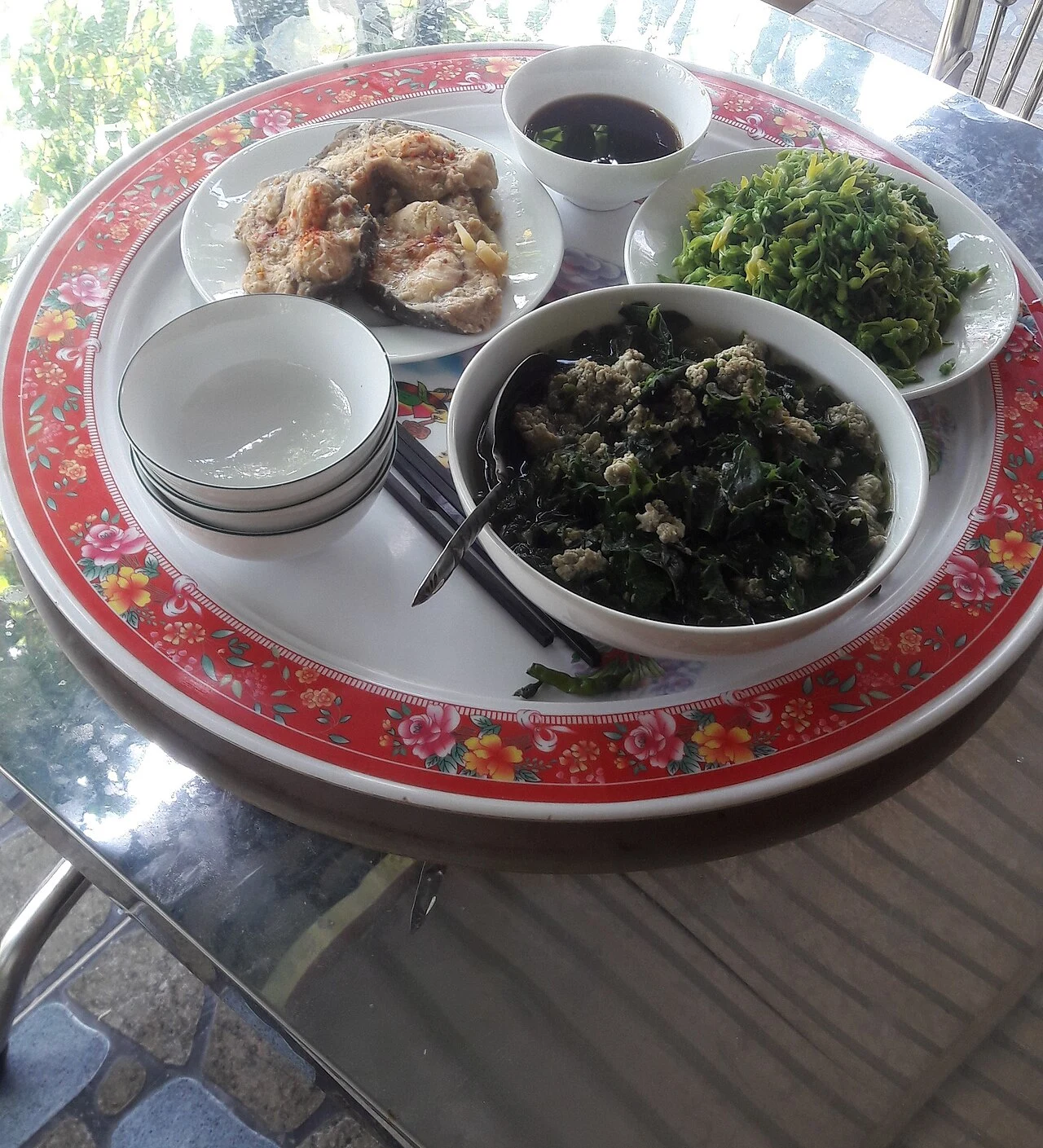
A home-cooked meal in Cat Ba rarely resembles the enormous seafood platters displayed outside waterfront restaurants. Lobster, premium grouper and large crabs are not automatic weeknight dinners simply because a family lives on an island.
Most home meals are quieter and more balanced: steamed rice, seasonal vegetables, soup and one savoury dish shared at the table. There is no single menu for every household; the market, season, budget and working day all matter.
Rice remains at the centre of the meal
Seafood shapes Cat Ba’s culinary reputation, but rice is the everyday foundation. A family table may have steamed rice, braised or steamed fish, boiled greens, a clear soup and fish sauce with chilli, garlic or lime. Practical, affordable ingredients are easier to share.
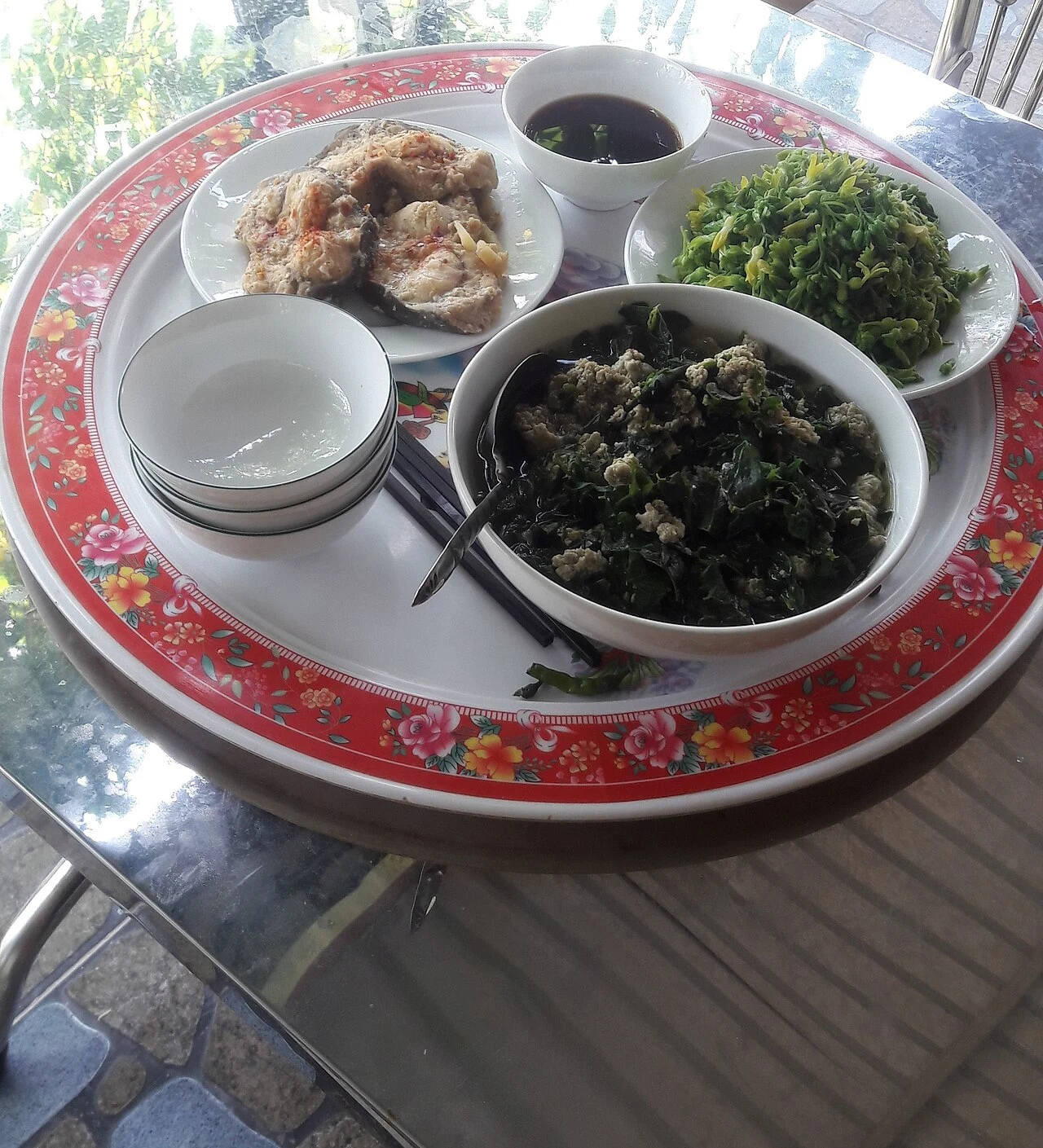
Illustrative Vietnamese family meal with rice, fish, vegetables and soup; not photographed in a Cat Ba home. Photo: Phương Huy · CC BY-SA 4.0 (resized from the original).
Seafood is familiar, but not always luxurious
Fish, squid, prawns, clams and other shellfish may be available, but households do not necessarily eat the premium species marketed to tourists. Valuable seafood may be sold or saved for celebrations. Everyday cooking can use smaller fish, modest shellfish and what is fresh and reasonably priced that morning.
Fish braised with fish sauce, pepper and shallots
Fish steamed with ginger and spring onions
Squid quickly stir-fried with vegetables
Clams cooked with lemongrass
Prawns simmered in a salty-sweet seasoning
Small fish or shellfish in a light soup
Braised fish is made for rice
Fish slowly cooked with fish sauce, pepper, shallots and sometimes caramelised sugar makes a concentrated savoury dish that can be shared with plenty of rice and vegetables. The sauce may be spooned over rice. Recipes differ between families: some are sweeter and darker, others favour pepper, ginger or chilli.
Vegetables make the meal complete
A home table is not all seafood. Morning glory with garlic, boiled leafy greens, cabbage, gourds, cucumber, herbs, tofu in tomato sauce, pickled greens and omelette can provide balance and value. Gardens in villages such as Xuan Dam, Hien Hao and Viet Hai may influence what reaches the kitchen, alongside market purchases and seafood.
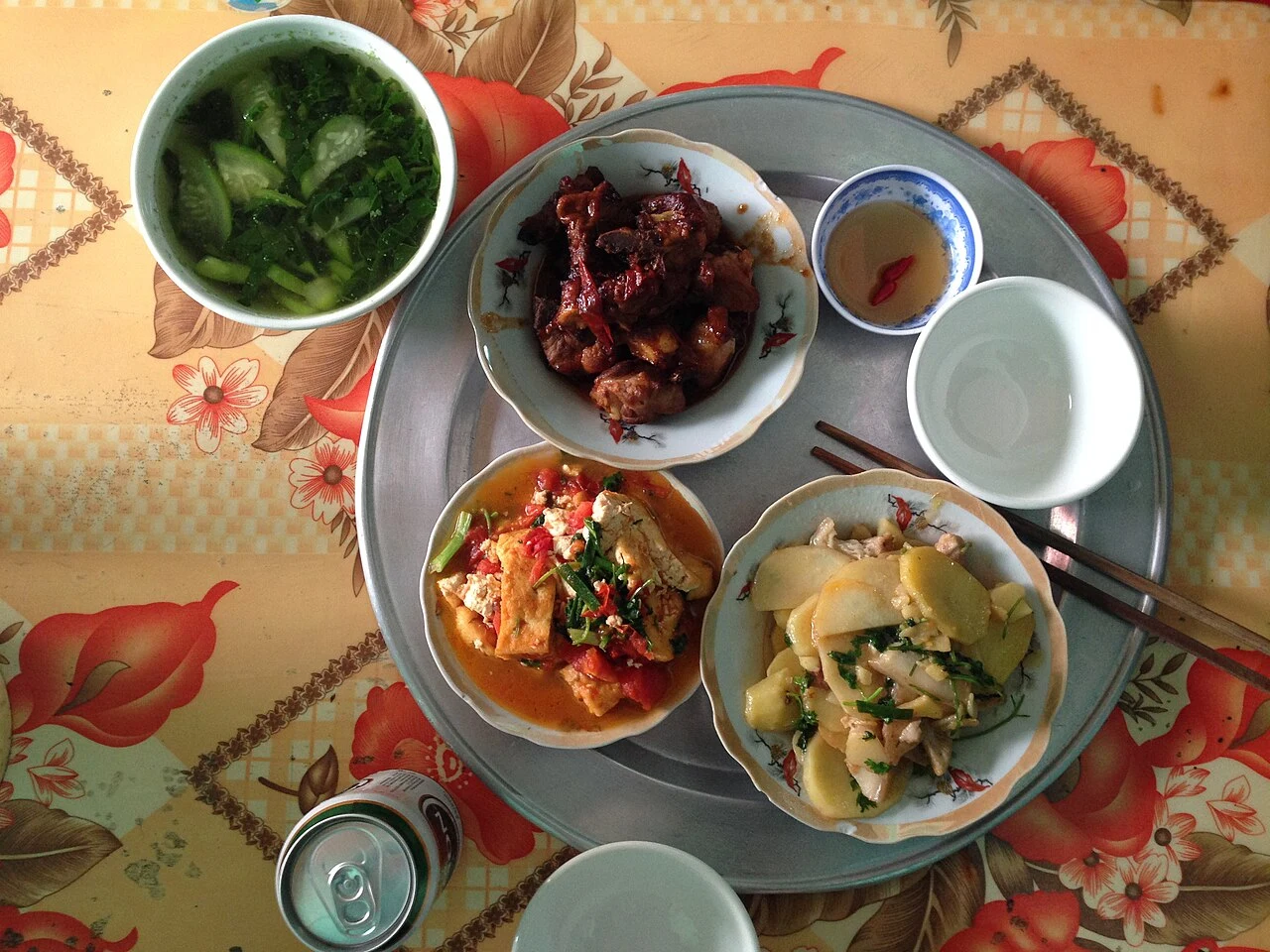
Illustrative Vietnamese home meal with vegetables and tofu; not photographed on Cat Ba. Photo: Hoangkid · CC BY-SA 4.0 (resized from the original).
Soup links the dishes together
A light canh balances salty food and makes vegetables easy to share. It may contain clams, small fish, greens, gourds or tomatoes. Fish trimmings and unused vegetables can also become broth rather than waste.
Breakfast is fast and functional
Early work and school favour bánh mì, sticky rice, noodle soup, seafood noodles or rice with leftovers, followed by tea or Vietnamese coffee. Breakfast may be bought at a nearby stall rather than made at home.
Lunch depends on where people work
Someone close to home may return for lunch; hotel staff, boat crews, drivers and market traders may eat where they work. A simple plate of rice, fish or meat, tofu and vegetables fits a busy shift. Dinner more often allows several shared dishes around the household table.
Fish sauce is part of a wider food culture
Fish sauce seasons braises, soups and dipping bowls. Cat Hai district is known for its fish-sauce tradition. At the table it may be mixed with garlic, chilli, lime or sugar. Vegetarian guests should ask whether even a vegetable dish contains fish sauce and tell a host in advance if they need it omitted.
When does a family prepare a seafood feast?
A larger crab, grilled shellfish, seafood hotpot or several premium dishes are more likely for relatives, friends or a celebration. Hotpot lets a group add fish, prawns, squid, clams, tofu, noodles and vegetables gradually. Celebration food should not be confused with an ordinary weeknight meal.
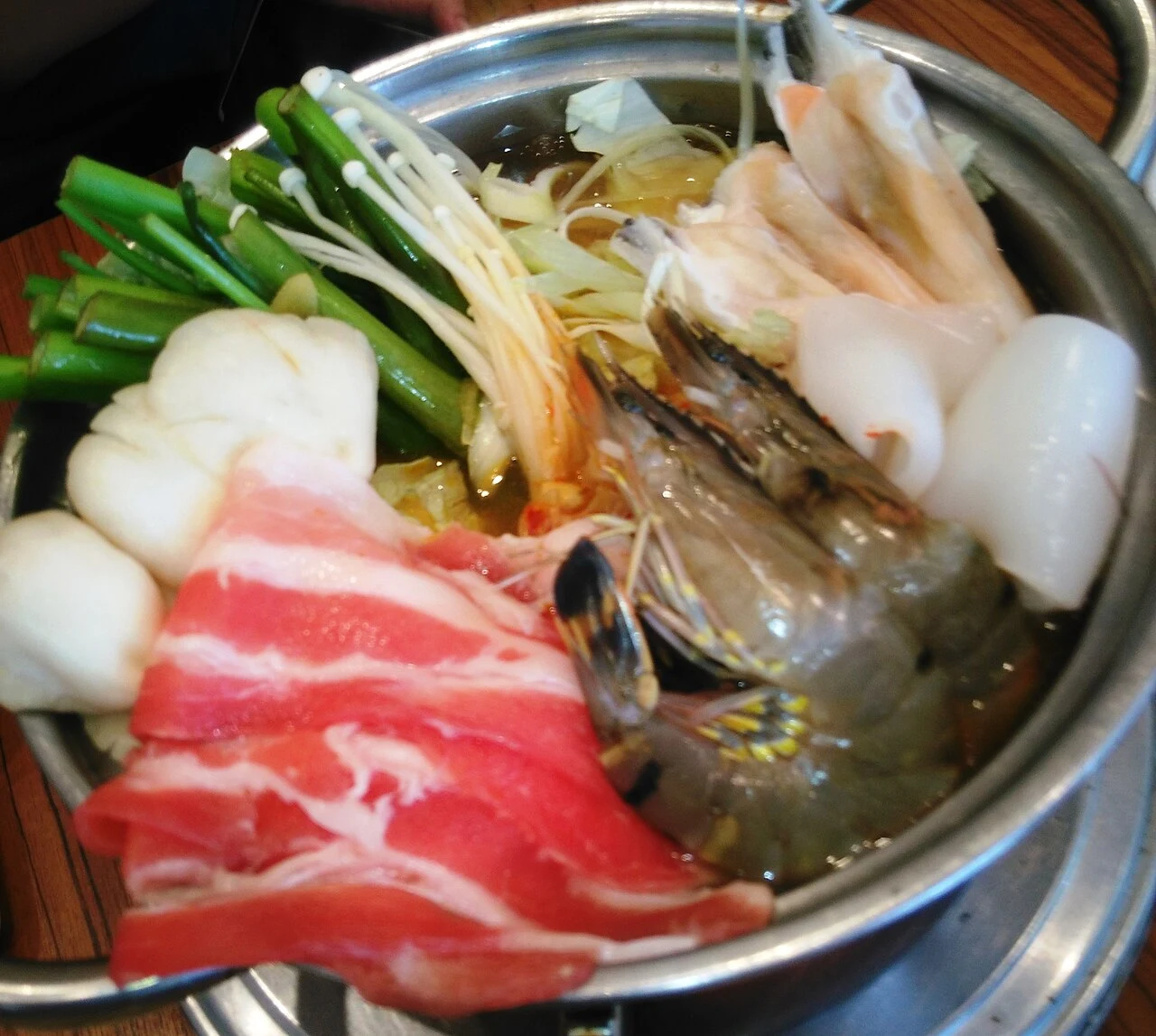
Illustrative seafood hotpot photographed at a Vietnamese restaurant; not a Cat Ba family meal. Photo: Phương Huy · Public domain (resized from the original).
How can visitors experience Cat Ba home cooking?
Private homes are not attractions. Seek a locally operated homestay, community experience or family-run kitchen that explicitly welcomes guests. Ask what is seasonal, and look for rice, vegetables, soup and modest shared dishes rather than an oversized seafood platter.
The balance of dishes, the shared table and the effort to avoid waste tell a deeper story of the island than any single signature recipe.
Plan your Cat Ba visit
For current services, browse the Cat Ba Outdoors tours, places to stay and transport options. Check the named service for its actual itinerary and inclusions.
Editorial source
Adapted for Cat Ba Outdoors from What Do Cat Ba Locals Eat at Home?. Photographs retain their original credits and licences where stated; archival and illustrative images are identified in their captions.



.jpg)

.jpg)
Comments
No comments yet — ask a question or share a tip below.