

Leave a little space in your Cat Ba schedule before choosing attractions. A flexible half-day can matter more than adding another stop.
Weather, tides, working harbours and local communities do not follow a brochure. Curiosity and patience tend to make a better trip than a tightly packed checklist. Here are the things worth knowing before you travel.
1. Cat Ba is much larger than the waterfront town
Cat Ba Town has hotels and restaurants around its waterfront, but it is only one part of the island. Beyond it are forested mountains, limestone caves, rural communities, quiet roads, working harbours and Cat Ba National Park.
Allow time for Trung Trang, the national-park area, Xuan Dam and Hien Hao. Viet Hai offers another perspective but needs a boat journey or a route through the park; it is not connected to town by an ordinary road. Even a slow journey across the island reveals more than a hotel balcony can.

The quieter island interior near Viet Hai; there is no ordinary road from Cat Ba Town directly to the village. Photo: Jakub Hałun · CC BY 4.0.
2. One night is possible, but rarely enough
A short stay can work as a stop between destinations. It leaves little room for weather changes or a meaningful mix of land and water experiences. A more balanced first visit might include:
One full day for Lan Ha Bay
Half or one full day for the national park, caves and island roads
Time for the market, local food and an unplanned walk
A flexible period in case weather changes the schedule
Travelling slowly does not mean doing less. It means spending more time in each place and less time checking in, boarding vehicles and carrying luggage.
3. Do not schedule a tight connection after a boat tour
Weather, harbour traffic, ferry queues and official safety decisions can disrupt a return journey. Avoid placing a flight, train or important appointment immediately after a bay cruise. A spare night or flexible half-day protects the rest of your trip. Use the buffer for a meal, market visit, beach walk or coffee if everything runs on time.
4. Weather can change a good itinerary
A bright forecast does not guarantee every cruise, kayaking route or swimming stop. Wind, visibility, rain, tide and marine conditions matter. Authorities may restrict boat operations for safety, and operators may need to alter or cancel a program.
Before paying, ask:
Who decides whether the tour can operate?
What happens if the itinerary is shortened?
Is there a refund, credit or alternative?
Which costs remain non-refundable?
When will the final decision be communicated?
A responsible operator explains uncertainty rather than promising perfect conditions.
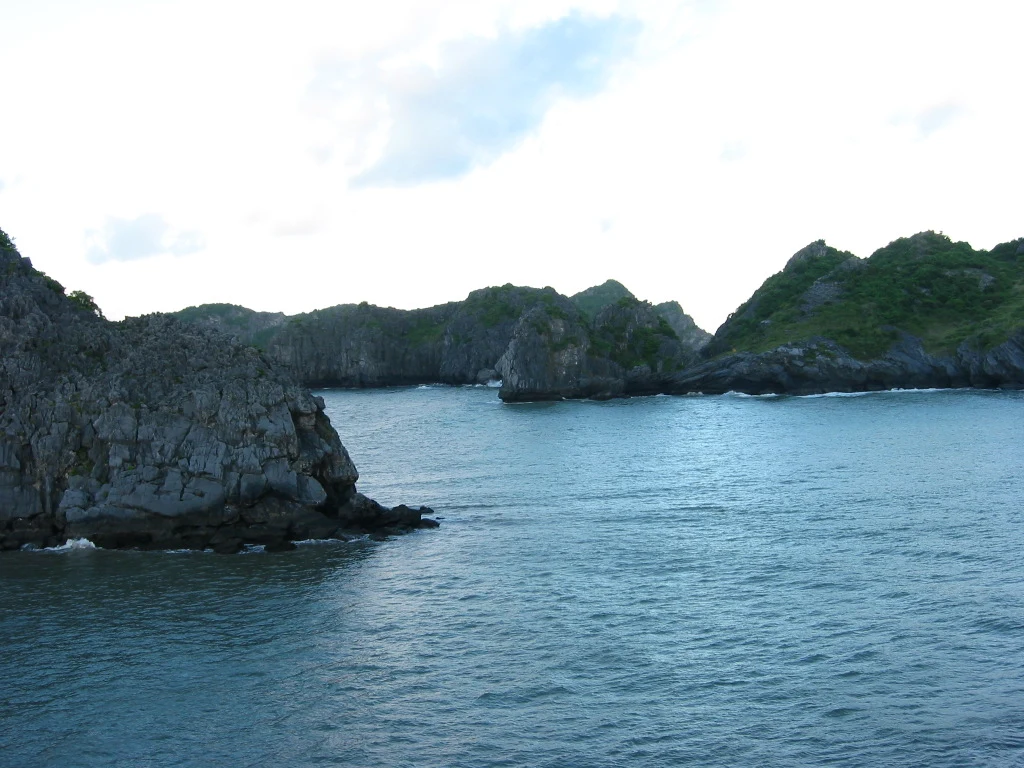
Clouds over Lan Ha Bay, photographed in 2003; this is an illustration, not a current forecast. Photo: Binh Giang · Public domain.
5. A “2-day, 1-night” cruise is not two complete days
Tour names count calendar days, not 48 hours. Many overnight programs board around midday and return before or around lunchtime the following day. Check pickup, harbour arrival, boarding, departure, kayaking, swimming, evening activities, morning excursion and return times for the exact cruise.
An overnight stay offers sunset, dinner and waking on the bay—experiences a day trip cannot give. Understand the actual duration before deciding whether the extra cost suits you.
6. The guide matters as much as the boat
Cabin photographs and lunch menus are easy to compare. The person shaping your day is less visible. A knowledgeable local guide can explain aquaculture, tides, fishing families and tourism’s effect on Cat Ba. They can answer questions and help guests notice details the scenery alone cannot explain.
A luxurious boat with an indifferent guide can be forgettable; a simpler vessel with an informed, attentive guide can be memorable. Ask who will guide your specific departure.
7. The cheapest tour may cost valuable time
A low price is useful only when the tour delivers what you expect. A larger group, shorter route, basic meal or separately charged fees may explain the difference. Before comparing quotations, confirm:
Final payable price and exact vessel
Maximum group size and actual hours on the bay
Entrance tickets and kayaking equipment
Meals, drinking water and hotel transfers
English-speaking guide
Insurance, VAT and any surcharge
Ask not only which option costs least, but what each price includes.
8. Carry some Vietnamese dong
The Vietnamese dong is the official currency. Vietnam Tourism notes that cash is useful for small purchases and street vendors, while many larger businesses accept cards. Bring smaller notes for drinks, local meals, short rides and markets. Carry enough for the day, but not an unnecessarily large amount.
9. Seafood is not automatically cheap
Premium fish, crab, lobster and shellfish remain valuable on an island and may be priced by weight. Before ordering:
Check whether the price is per kilogram, plate or animal.
Watch the seafood being weighed.
Agree on the cooking method and any preparation fee.
Check whether rice, vegetables and drinks cost extra.
Confirm the estimated total.
Everyday home meals more often balance rice, vegetables, soup, tofu, eggs and smaller fish than luxury seafood.
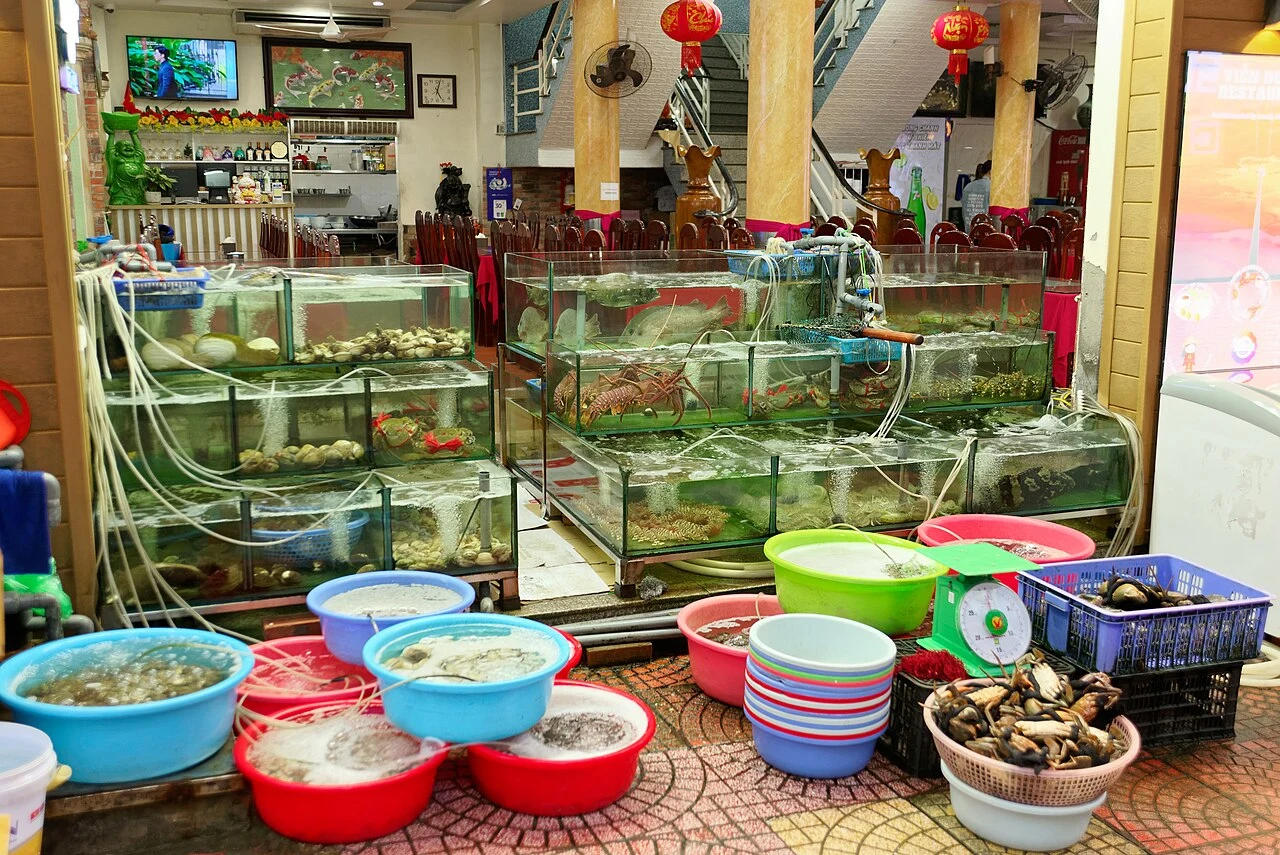
A seafood shop in Cat Ba Town in January 2024. Confirm the price and weight before ordering. Photo: Jakub Hałun · CC BY 4.0.
10. Not every place is a tourist attraction
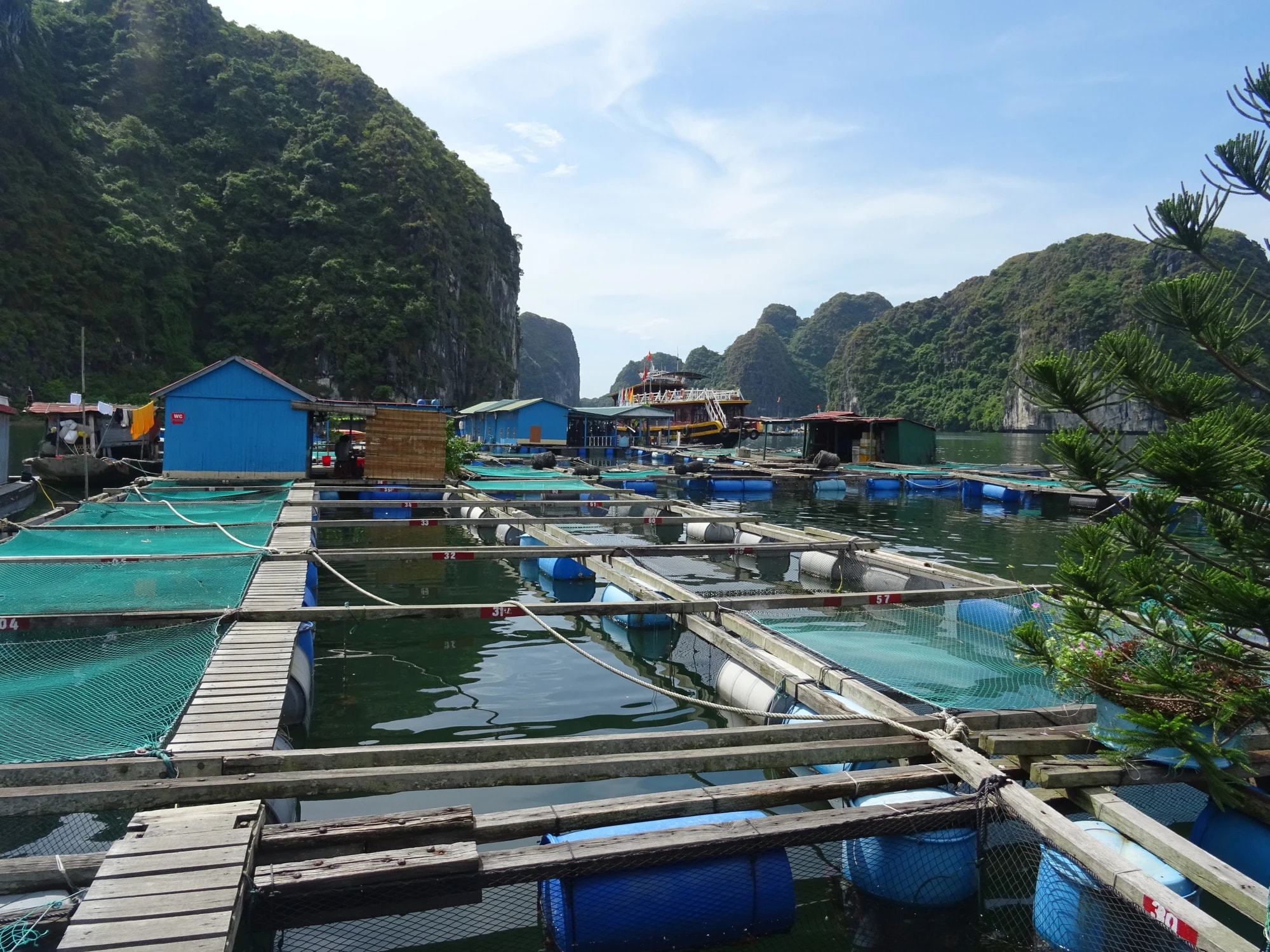
Fishing villages and rural communities are neighbourhoods, not performances. Ask before photographing someone closely. Keep voices low near homes and do not enter private spaces. In Viet Hai, Cai Beo or another community, follow local guidance instead of assuming every doorway or fishing platform is public.
Respect creates better encounters: people can share their stories without being treated as scenery.
11. Natural places cannot guarantee perfect photographs
Water colour changes with cloud, tide, rain and sunlight. High tide can narrow a beach; mist can hide peaks; wildlife may remain unseen. This is a living environment, not a controlled attraction.
UNESCO describes the Cat Ba Biosphere Reserve as including tropical forests, wetlands, mangroves and coral-reef ecosystems. It identifies the endemic golden-headed or Cat Ba langur, and the World Heritage evaluation calls it critically endangered. Never force a wildlife sighting; distance matters more than a photograph.
12. Plastic does not disappear when the boat leaves
A bottle on a trail or a bag on a beach can enter the water and affect wildlife. Bring a refillable bottle when practical, refuse unnecessary bags and carry rubbish until it can be disposed of properly. Do not leave cigarette ends, packaging or wet wipes in caves, forests or marine areas. Consider operators that provide refill water, reusable equipment and clear environmental guidance.
13. Leave room for ordinary moments
Not every valuable experience needs a ticket. Watch the harbour start work, visit the market before breakfast, stop for coffee away from the waterfront, take a slower route inland and ask a family-run restaurant what is fresh. These moments can reveal more of Cat Ba than rushing between famous stops.
Come prepared, but remain flexible
Bring suitable clothing, some VND and realistic expectations. Choose a knowledgeable guide and respect local communities and protected places. Most importantly, allow the island enough time to reveal more than its postcards.
Plan your Cat Ba visit
For current services, browse the Cat Ba Outdoors tours, places to stay and transport options. Check the named service for its actual itinerary and inclusions.
Editorial source
Adapted for Cat Ba Outdoors from What I Wish Travellers Knew Before Visiting Cat Ba. Photographs retain their original credits and licences where stated; archival and illustrative images are identified in their captions.



Comments
No comments yet — ask a question or share a tip below.