

The best local seafood experience in Cat Ba is not necessarily found in the restaurant with the largest sign or the most beautiful harbour view. Local residents usually care about three things: what arrived that day, whether the price is clear and whether the kitchen knows how to cook it simply.
If you want to eat seafood like a local, explore beyond Cat Ba Town’s waterfront and follow the rhythm of the island rather than the tourist crowds.
Start around Cat Ba Market
Cat Ba Market is one of the best places to understand what people on the island actually eat. Visit in the morning, when fish, squid, prawns, crabs and shellfish are being sold for households and local restaurants.
The market is more useful as a reference point than as a formal dining destination. Look at what is abundant, compare prices and notice which seafood appears freshest. You can then order the same seasonal catch at one of the small restaurants in the surrounding streets.
Some establishments may also cook seafood purchased from the market, but you should agree on the preparation fee before buying anything.

The entrance to Cat Ba Market, a useful starting point for seeing the day’s catch.
Walk inland from the waterfront
Restaurants along the main harbour road offer convenient locations and attractive views, but locals also eat in the smaller streets behind the waterfront. These family-run eateries may have simple tables, short menus and fewer English signs, yet they often serve seafood bought that morning.
A busy dining room is a useful clue. Look for tables occupied by Vietnamese families, workers or groups sharing several dishes. A restaurant does not need to look fashionable, but its tanks, tables and food-preparation areas should appear clean.
Ask what arrived that day instead of ordering from photographs alone. The freshest and best-value choice may be squid, clams or a local fish rather than lobster.
Try the Ben Beo Harbour area
Ben Beo Harbour is close to Cai Beo Fishing Village, a historic fishing community near Cat Ba Town. The area connects the town with Lan Ha Bay and offers a closer look at the island’s fishing culture.
Floating seafood restaurants around the harbour can provide a memorable meal. Fish and shellfish may be kept in tanks or holding nets, and diners can select their seafood before it is cooked.
Before boarding a small transfer boat, confirm:
The restaurant’s name
The return boat time
Whether transportation is complimentary
How the seafood is priced
Whether cooking and side dishes are included
The waterfront setting is part of the experience, but it should not replace clear pricing and safe transportation.

Cai Beo Fishing Village seen from above; this image shows the harbour community, not a specific restaurant.
Consider the night market for a casual meal
The local tourism portal lists Cat Ba Night Market. Location, opening hours and operating arrangements may change by season, so verify them locally before visiting.
The night market is better suited to travellers who want a casual snack or several small dishes rather than a quiet seafood dinner.
How to order seafood without an expensive surprise
Seafood may be priced per kilogram, per portion or per individual animal. Never assume that the number shown is the final price of the dish.
Before confirming your order:
Ask for the price and unit of measurement.
Choose the seafood yourself when possible.
Watch it being weighed.
Confirm the total weight.
Select the cooking method.
Ask whether preparation carries an additional fee.
Check the price of drinks, rice and vegetables.
Request the estimated total bill.
If a restaurant cannot explain its prices clearly, choose another place. Fresh seafood is widely available in Cat Ba, so there is no need to accept an uncomfortable transaction.
What should you order?
Choose according to the season and daily catch. Depending on availability, a local-style meal might include:
Steamed clams with lemongrass
Grilled squid
Prawns steamed with beer or coconut water
Crab with salt and chilli
Grilled oysters with spring-onion oil
Steamed fish with ginger and herbs
Seafood hotpot for a group
Simple cooking methods often produce the best results. Steaming, grilling and light seasoning preserve the natural flavour, while heavily sauced dishes can make it difficult to judge freshness.
Ask the server to recommend the day’s catch and give them your approximate budget. This usually works better than ordering the most expensive animal in the tank.
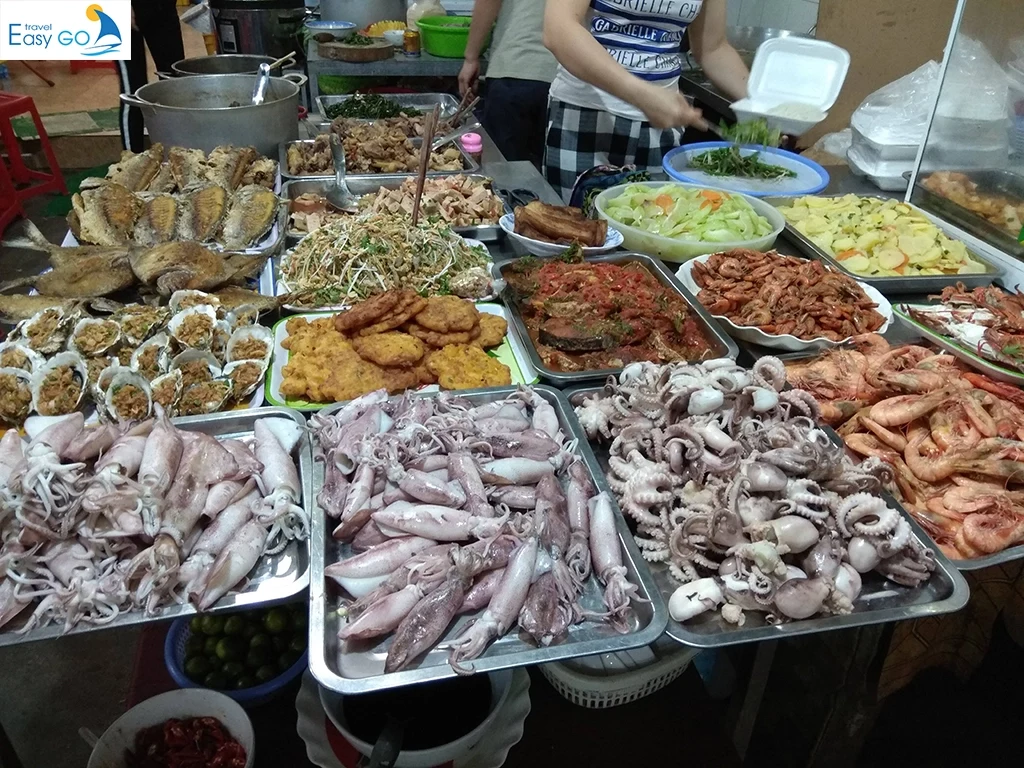
A market food stall with prepared dishes and fresh seafood; ask what is available today.
How can you recognise fresh seafood?
Live seafood should appear active, while fresh fish should have clear eyes, firm flesh and a clean sea smell. Shells should be closed or react when touched. Avoid anything with a strong ammonia-like smell.
Clean tanks are helpful, but they are not the only sign of quality. Look at the restaurant’s customer turnover and observe how seafood is stored and handled. If you have allergies, explain them clearly because shared grills, pans and sauces may cause cross-contact.
Eat early for a better experience
Local families often dine earlier than international holidaymakers. Arriving between the late afternoon and early evening can give you a better selection, more attentive service and enough daylight to inspect the seafood.
During weekends, holidays and the summer season, popular places may become busy quickly. Restaurant names and ownership can change, so choosing by freshness, transparent pricing and local custom is often more reliable than depending entirely on an old online list.
The answer to “Where do locals eat seafood?” is therefore not one famous restaurant. It is the morning market, the modest streets behind the waterfront, the harbour around Ben Beo and the family-run kitchens that serve what the boats brought in. Follow those signs and Cat Ba’s seafood becomes more than dinner—it becomes part of the island experience.
Plan your Cat Ba visit
For current services, browse the Cat Ba Outdoors tours, places to stay and transport options. Check the named service for its actual itinerary and inclusions.
Editorial source
Adapted for Cat Ba Outdoors from Where Do Locals Eat Seafood in Cat Ba?. Photographs retain their original credits and licences where stated; archival and illustrative images are identified in their captions.


Comments
No comments yet — ask a question or share a tip below.