
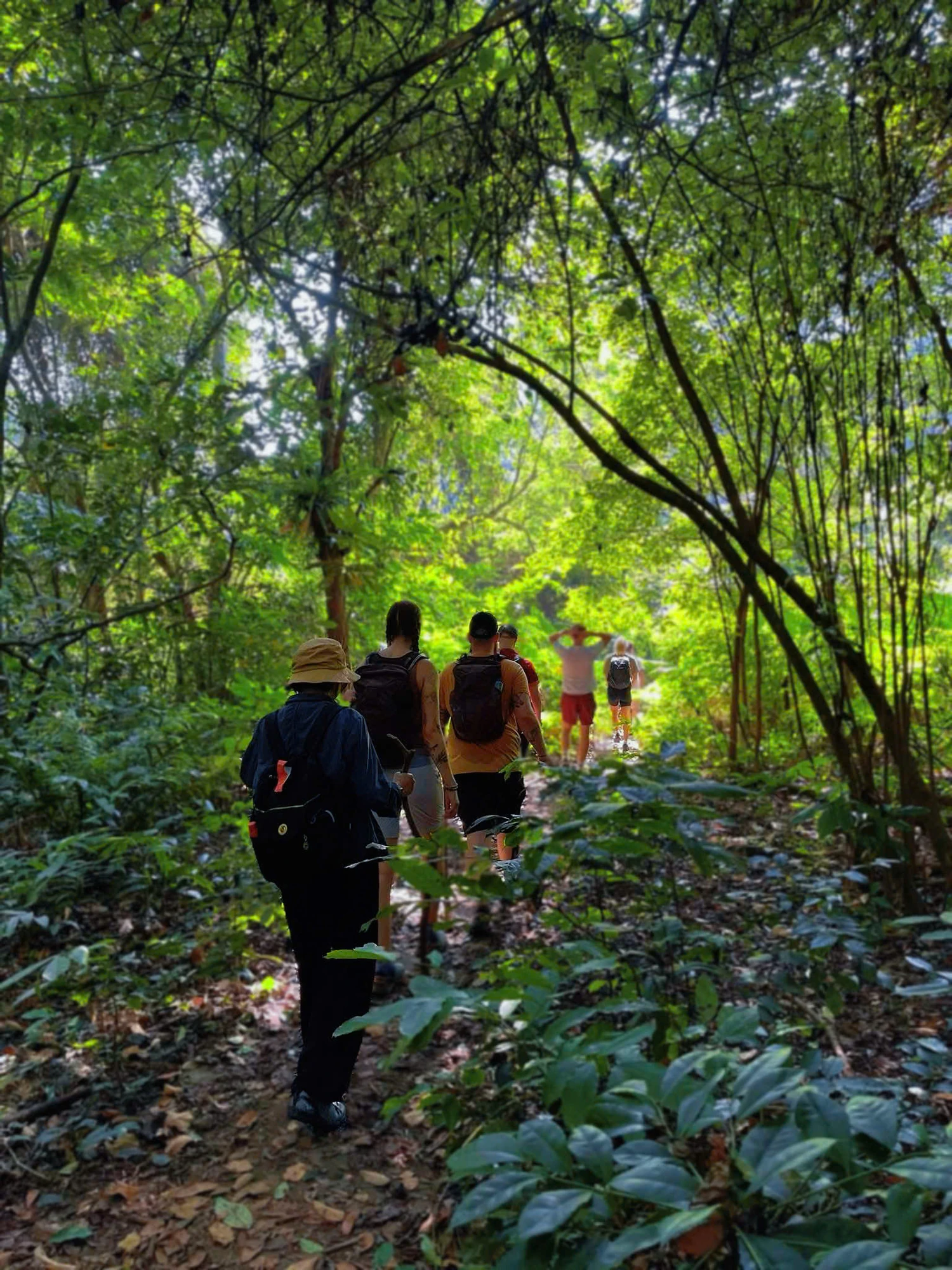
The Cat Ba Biosphere Reserve is a UNESCO designation, made in 2004, that covers the Cat Ba archipelago: its forest, mangroves, reefs, villages and the water of Lan Ha Bay. It is not a fence or a closed park. It means the area is managed to protect nature while people continue to live, farm, fish and receive visitors there.
Reserve facts come from UNESCO and Vietnamese government sources listed with this article. Tour details come from our own listings, checked on 11 November 2026; the linked pages show today's price and any changes.
What UNESCO designated
UNESCO's Man and the Biosphere (MAB) programme lists Cat Ba with 2004 as its year of nomination. Its profile gives these figures:
| Measure | UNESCO figure |
|---|---|
| Total area | 26,419 ha |
| Land | 16,417 ha |
| Sea | 10,002 ha |
| Limestone islands | 366 |
The same total, 26,419 hectares after a 2023 boundary adjustment, is reported by the Ministry of Agriculture and Environment's newspaper. UNESCO describes forests, wetlands, mangroves and coral reefs, and names the golden-headed langur, also called the Cat Ba langur, as its flagship species: it lives on Cat Ba Island and nowhere else in the world. Recent reports put the wild population at fewer than a hundred animals.
In 2025 UNESCO revalidated Cat Ba as a World Biosphere Reserve after its second ten-year periodic review, announced at the MAB International Coordinating Council meeting in Hangzhou, China.
The biosphere reserve is a separate designation from the World Heritage listing. Since 2023 the archipelago has also been part of the Ha Long Bay–Cat Ba Archipelago World Heritage site.
How the three zones work
Every UNESCO biosphere reserve is divided into three kinds of area:
- Core areas are strictly protected ecosystems set aside for conserving habitats and species.
- Buffer zones surround the core and allow activities compatible with conservation, such as research, education and sustainable use of resources.
- Transition areas are where communities live and work, with the aim of sustainable economic and human development.
A typical visitor day on Cat Ba moves from forest to farmland, harbour and town. The zones are management categories rather than lines you will notice, so follow your guide and any signs about where you may walk, swim or land.
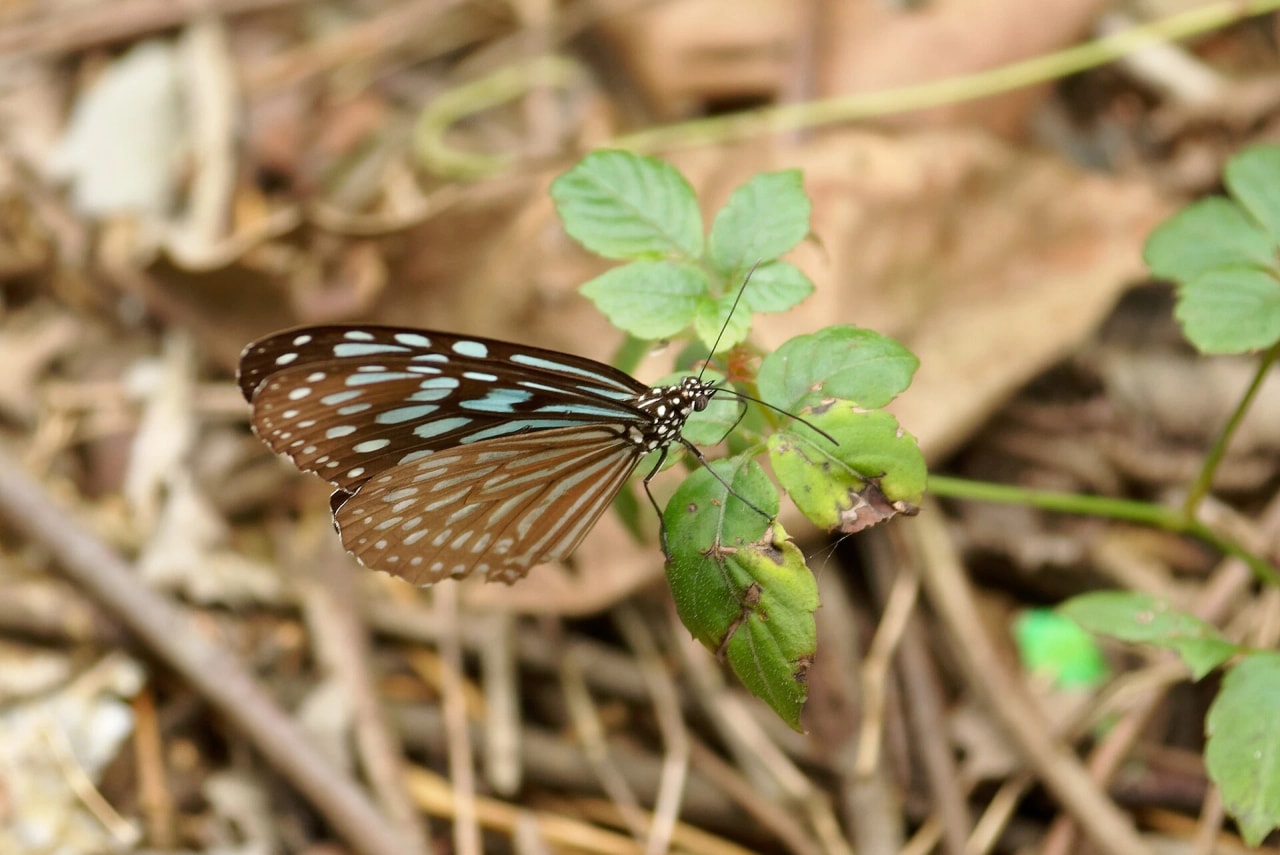
Jakub Hałun / CC BY 4.0 · Source · Adapted
Visiting responsibly
A biosphere reserve works only if visitors add little pressure. Practical habits help:
- Stay on marked trails in the national park, and go with a guide on longer routes.
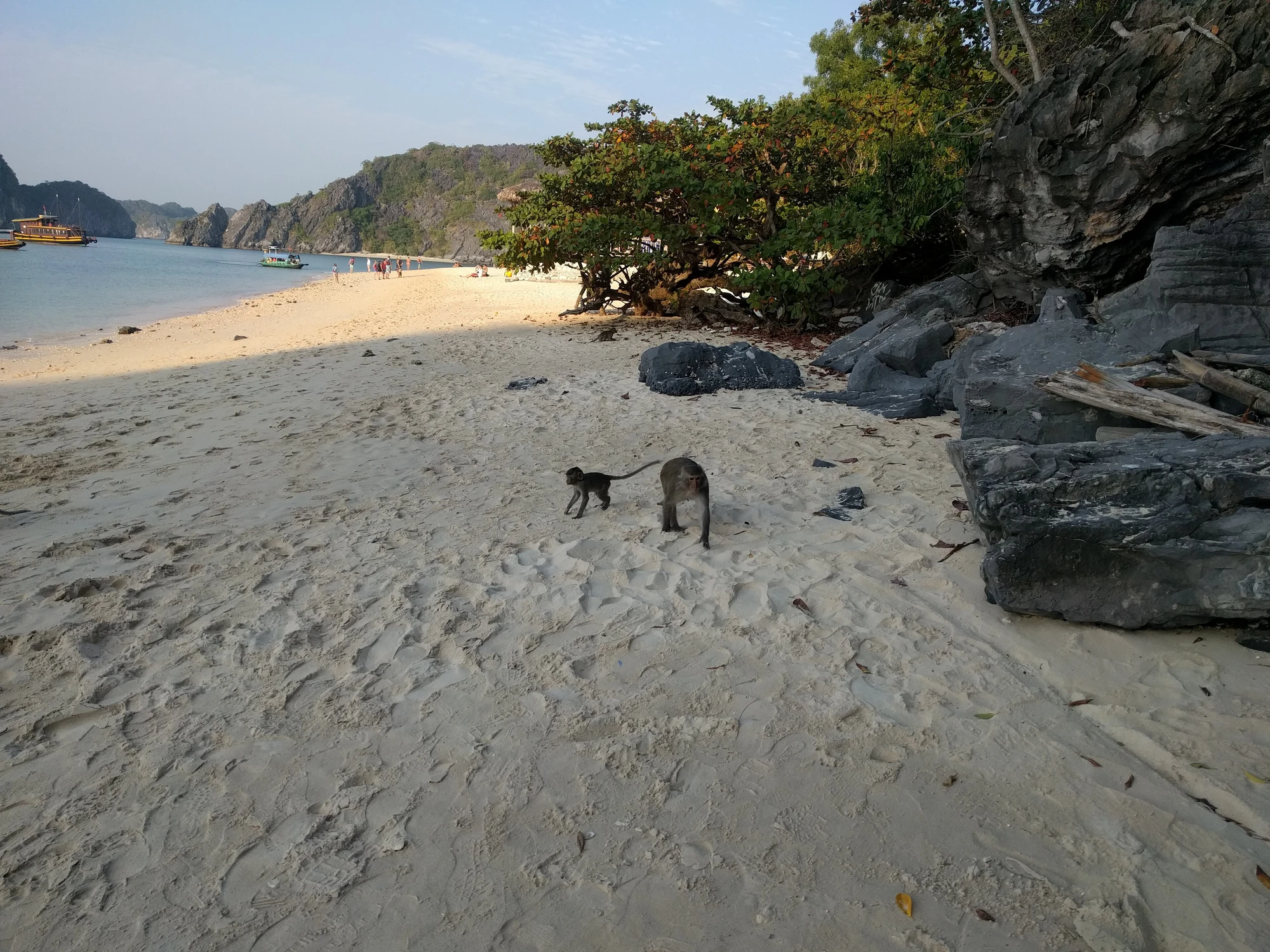
- Watch wildlife from a distance. Do not feed monkeys or try to attract animals for a photograph.
- Keep noise down in forest and villages, especially early in the morning.
- Carry rubbish out, including from beaches and boats.
- Leave natural items in place: shells, coral, plants and cave formations.
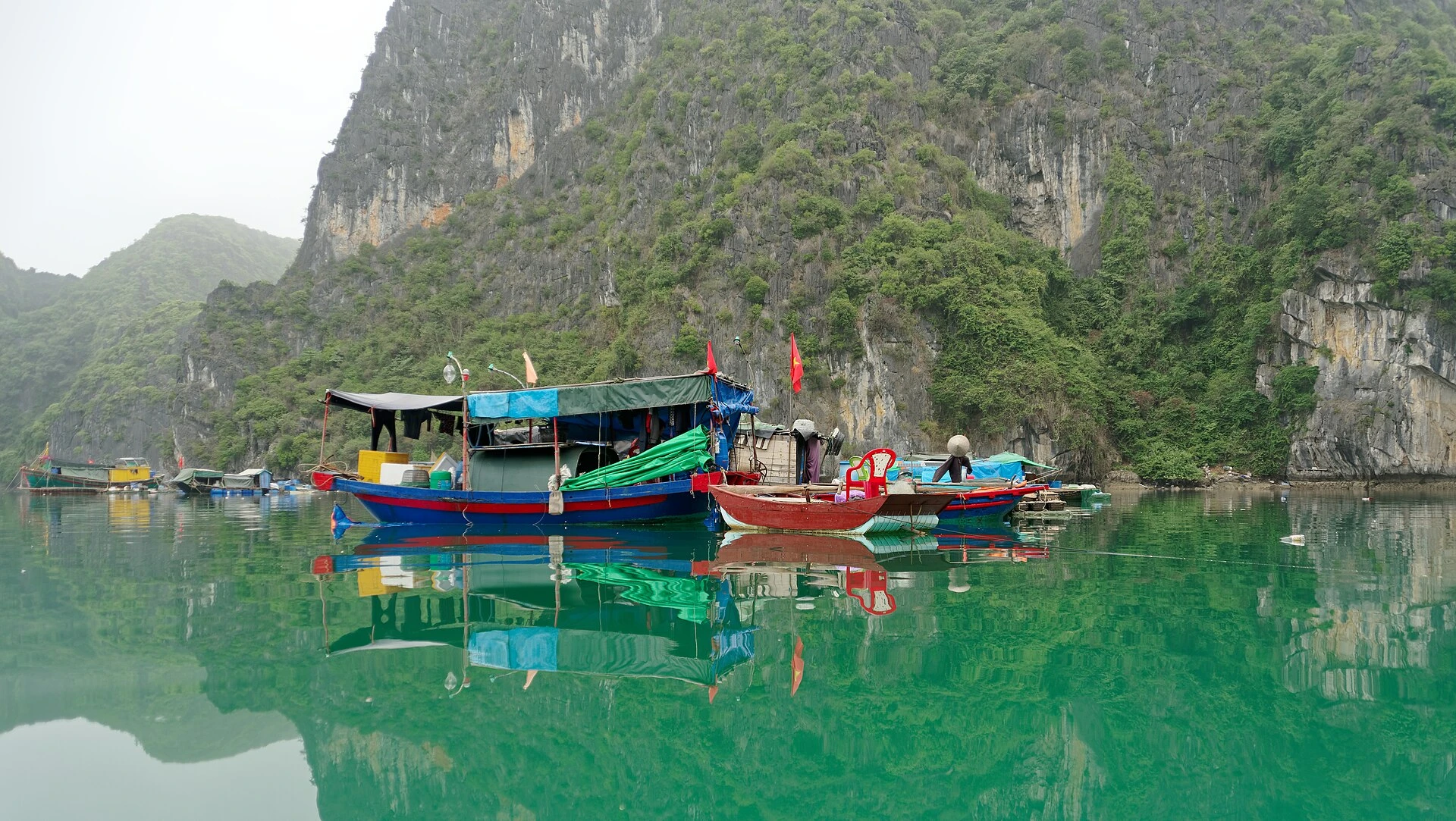
- Ask before photographing people in villages and on floating homes.
Tours that pass through the reserve
The Trekking National Park & Viet Hai Village day starts with an 08:00 – 08:30 pickup and ends at 17:00, in a group listed as under 20 pax. It combines a forest trek and wildlife spotting in Cat Ba National Park, the Frog Pond freshwater lake, a climb of Doc Dai mountain, cycling in Viet Hai village and a boat trip through Lan Ha Bay. Entrance fees, lunch, transport and bicycles are included. Animals are wild, so sightings cannot be promised.
The Full-Day Lan Ha Bay Tour covers the marine side: Cai Beo floating village, kayaking through hidden lagoons and a swim at Ba Trai Dao, from an 08:00 – 08:30 pickup to 17:00.

Jakub Hałun / CC BY 4.0 · Source · Adapted
Before you go
Choose one forest day and one bay day if you can, rather than squeezing both into a single rushed itinerary. Read what to wear for trekking on Cat Ba and our responsible travel notes, then check the product page for the inclusions on your date.
Sources and current details
- Trekking National Park & Viet Hai Village — current itinerary, inclusions and today's price
- Full-Day Lan Ha Bay Tour — current itinerary, inclusions and today's price
- UNESCO Man and the Biosphere Programme — Cat Ba
- UNESCO — Cat Ba Biosphere Reserve in Viet Nam revalidated as UNESCO World Biosphere Reserve
- UNESCO Man and the Biosphere Programme — About the World Network of Biosphere Reserves
- Vietnam Agriculture and Environment (Ministry of Agriculture and Environment newspaper) — Cat Ba Archipelago maintains its status as a UNESCO World Biosphere Reserve
- Cat Hai Special Zone portal (Hai Phong) — Giới thiệu đặc khu Cát Hải
Editorial check: 11 November 2026. This guide explains planning choices; the live product page and your written confirmation are what count for availability, current prices and booking conditions.



Comments
No comments yet — ask a question or share a tip below.