
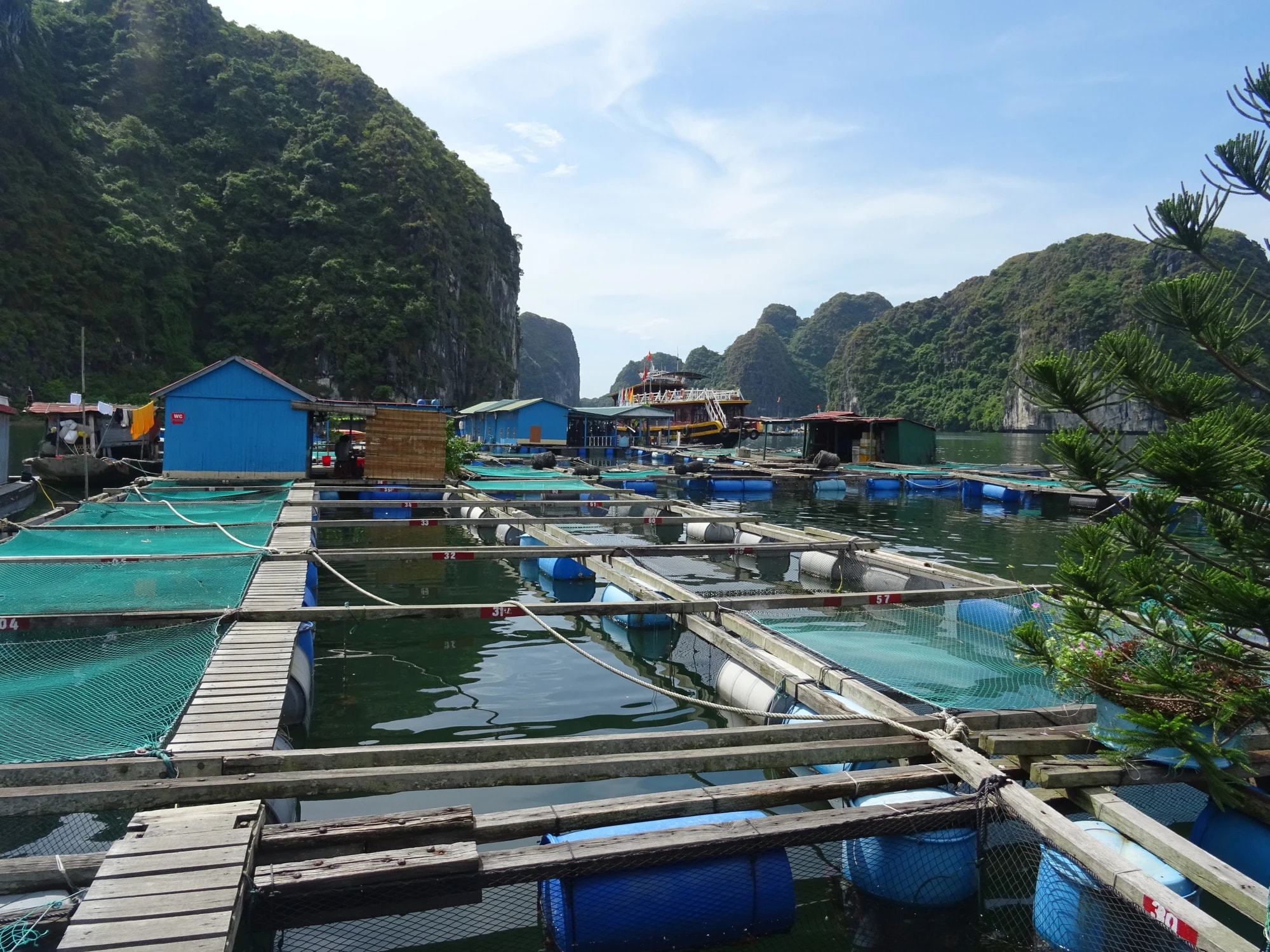
A house in a fishing village is only the visible part of a floating system. Look below the roofline around Cai Beo and Lan Ha Bay: decks, floats, walkways and fish cages explain how a family can live and work on the water.
How does a house float?
The foundation is a buoyant raft rather than a house sitting on the seabed. In the process described by Cat Ba Beyond, the platform is assembled near shore, tested afloat and towed to its mooring before the remaining house components or additional sections are added. Designs vary; this is an explanation for visitors, not a construction specification.
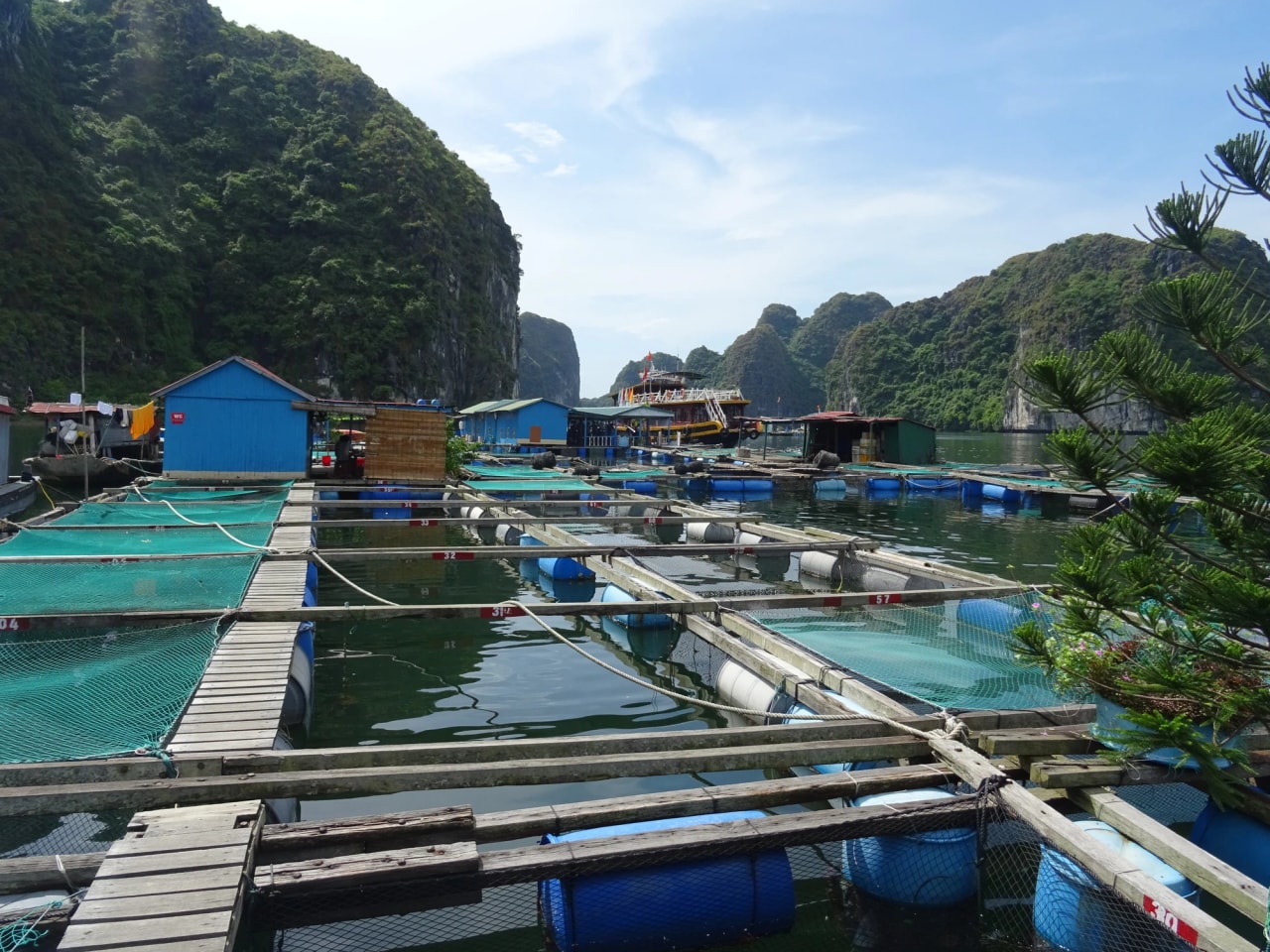
Floating houses and connected fish cages in Lan Ha Bay, photographed in 2018. This is a completed layout, not a building site. Photo: Christophe95 · CC BY-SA 4.0.
Floats carry the weight; the frame spreads it
The deck needs flotation beneath it and a frame that distributes the load. Timber, bamboo, sealed drums and manufactured pontoons are among the materials described in the source. People, supplies and equipment all add weight. A lightweight roof alone cannot compensate for an overloaded or uneven platform.
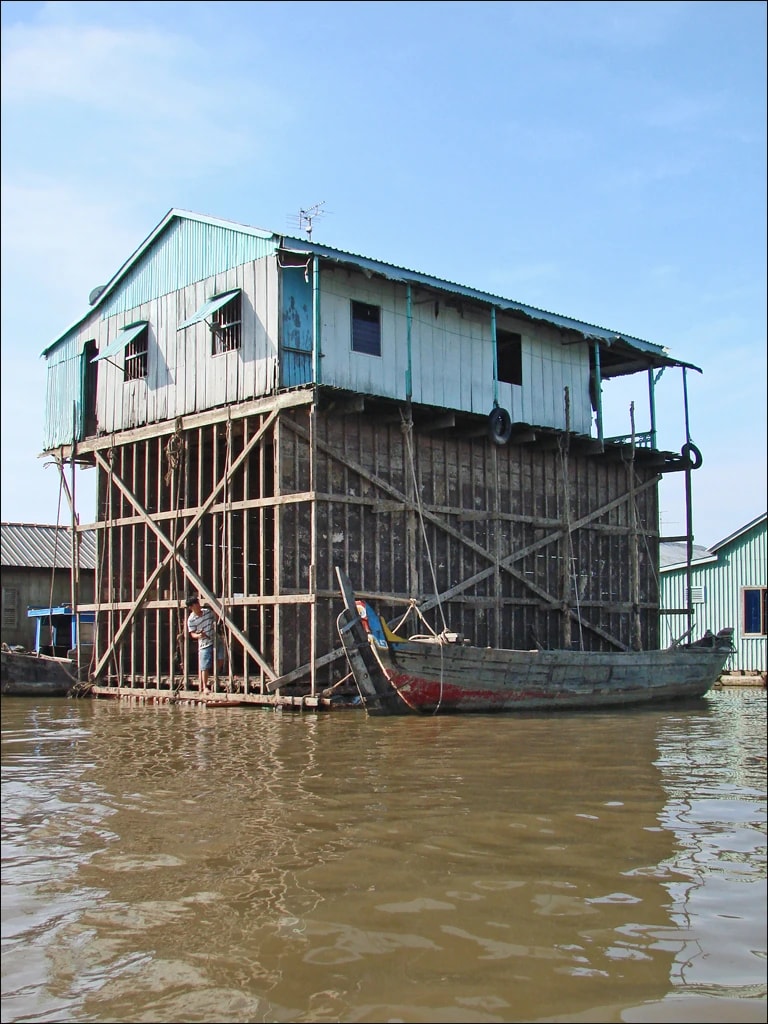
Timber framing under a floating house being repaired near Chau Doc, An Giang. This photograph is illustrative and is not from Lan Ha Bay. Photo: Jean-Pierre Dalbéra · CC BY 2.0.
From the shore to the mooring
Towing and anchoring are different jobs. A boat moves the floating platform; a mooring keeps it in position while allowing tidal movement. Water depth, wind, current and boat access matter. The source describes gradual delivery of building materials by boat, rather than placing every heavy item on the raft at once.
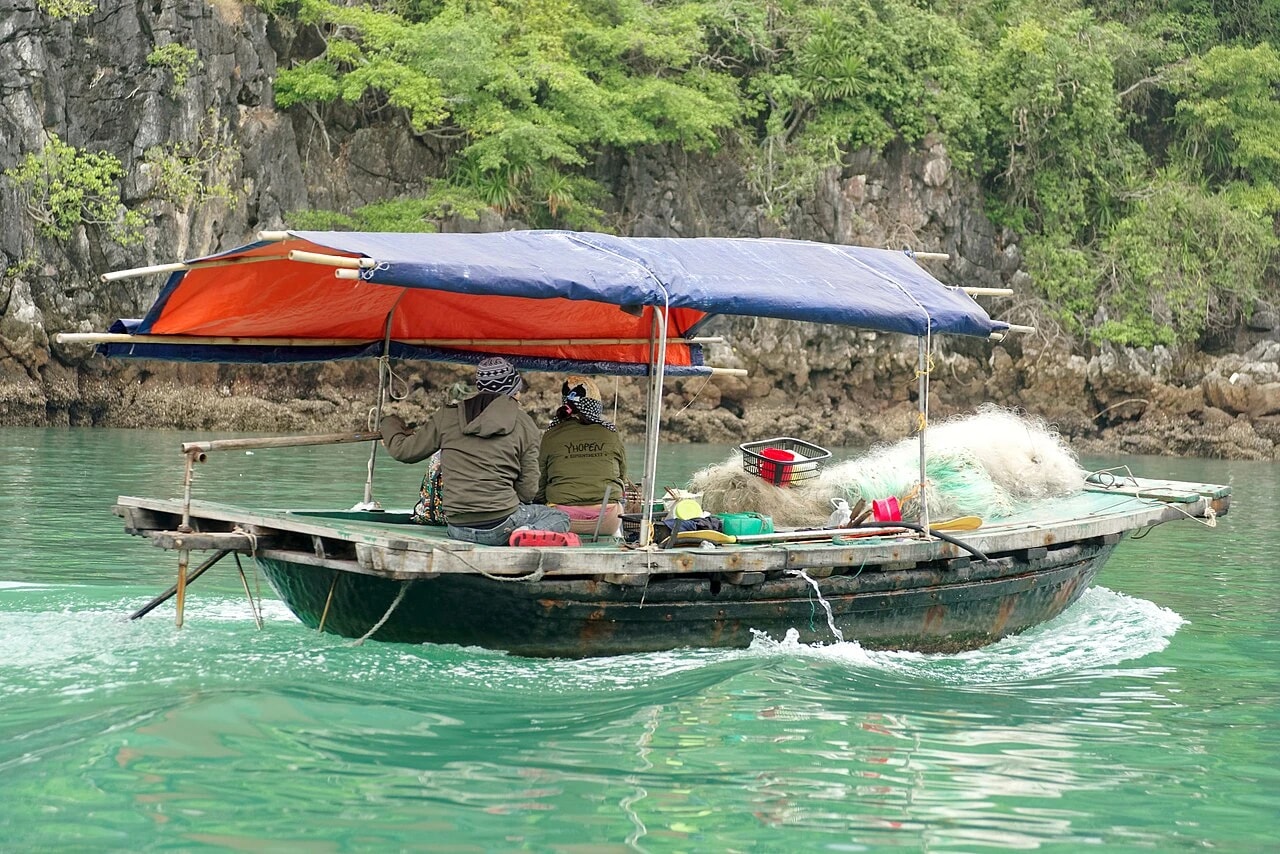
A working boat near Cai Beo in January 2024. It illustrates local boat access, not a raft being towed. Photo: Jakub Hałun · CC BY 4.0.
Why are there so many squares around the house?
Some rectangles are fish cages with nets below; others provide walking, landing or working space. Connected modules can separate living areas from aquaculture. The FAO manual on wooden fish cages explains frames, flotation and moorings, but it is not a certification or building plan for a Lan Ha Bay home.

A workboat near Cai Beo in January 2024. This image does not document a delivery of construction materials. Photo: Jakub Hałun · CC BY 4.0.
A home that needs continual care
Salt water, repeated movement and changing loads put floats, fasteners, ropes and decking under strain. Repairs and inspections are part of the system. A historic photograph cannot establish the condition of a property today, and this article does not confirm that a particular home is approved for visitor accommodation.
See the village respectfully
Our Full-Day Lan Ha Bay Tour lists Cai Beo in its itinerary. Passing a village is different from entering a private home or visiting an active building site. Ask before photographing residents or stepping onto a raft; follow the guide and keep walkways clear. For an arranged visit, contact Catba Outdoors. For context, read our Cat Ba changes guide.
Floating-house questions
Are floating houses built entirely out on the bay?
Not in the sequence described by the source: the floating foundation is assembled near shore and tested before towing. House components and extra modules can be added later.
Do floating houses drift with the tide?
They float but are moored. The mooring holds their position while the platform rises and falls with the water.
Can every floating house be booked as a homestay?
No. A fishing home or farm is not automatically visitor accommodation. Check the named property, access arrangements and actual booking conditions.
Will a tour show houses being built?
Not necessarily. Construction is not a guaranteed part of our itinerary; the photographs here show completed structures, repairs and working boats.
Sources and photo credits
Prepared for Catba Outdoors using Cat Ba Beyond and the FAO: Construction and installation of hexagonal wooden cages for fish farming. The cage manual provides related technical context, not instructions for constructing a dwelling. Original photo credits and licences are retained below each image; files were resized where needed and converted to WebP without changing the depicted scene.


_(6620592099).jpg)


Comments
No comments yet — ask a question or share a tip below.